Showing posts with label Viola pedata. Show all posts

Wednesday, April 29, 2015

A Weekend of Birds & Botany in Shawnee State Forest

Whew.  It's been a hectic last few weeks and months for your blogger.  The necessary combination of precious free time and energy to put into new posts just hasn't materialized and is reason for the lack of activity.  I hope to rectify this going forward but for now let's catch up on a few items I'd like to make mention of.

First off, I'd like to take time to honor the life and legacy of an educator, mentor and good friend of mine whom the Ohio naturalist community recently lost.  Dennis Profant, author and publisher of the famed Field Biology of Southeastern Ohio blog and my former professor at Hocking College, unexpectedly passed away on April 15th.  He was one of the most influential professors I ever had and is a large contributor to who, what and where I am as a botanist, naturalist and human being today.  From birds and bugs, to wildflowers and trees, Dennis made learning fun with his unique wit and way of teaching things.  His mind was a walking encyclopedia on our natural world and his passion infectious.  I will always fondly remember our times in the field together or just kicking it in his office discussing everything from jazz to moths.  I'm beyond thankful to have gotten close to him in the years following my time at Hocking College and am greatly saddened to know our time together is done.  What I wouldn't do for one more foray into the woods with him...

On a more positive note, I'd like to personally thank all the kind people who took the time to say hello at the recent Ohio Botanical Symposium back in late March.  Meeting and talking to readers/fans of this website and the gracious words you have to say mean the world to me.  This blog would have slid into oblivion long ago if it wasn't for the compliments, encouragement and confirmation of interest from you all over the years.  I hope you'll continue to read and share my love for everything botanical and beyond.  And Ron G., I promise you'll have your Helianthus themed post to read and use in the next few months!

It's spring!  Taking a glance at my most recent post has this site locked in the depths of winter's chill but rest assured the wildflowers and trees have progressed anyways and thankfully so.  The last two weekends have had your blogger fulfill speaking gigs and lead field trips for the Arc of Appalachia's annual wildflower pilgrimage and Ohio Ornithological Society's annual conference, respectively. Both events were packed full of excited, eager naturalists ready to fully embrace spring's blossoming and an amazing time was had by all.  I would like to recap both events in blog form, starting with this past weekend and the OOS' invasion of Shawnee state forest.

Sunrise over Turkey Creek Lake in Shawnee State Forest

You might recall my post detailing last year's OOS event in Shawnee.  We had exquisite weather and phenomenal birding despite the botany being a bit behind.  This time around the tables were turned with excellent botany and mediocre birding.  Unseasonably cool temperatures and a steady all day rain on Saturday into Sunday kept the birds and their food sources from moving much.  A number of the usual migratory suspects seemed to be late and/or absent from this weekend but that doesn't mean it was a total washout.  The rare chance to see and catch up with old friends is one of the biggest draws for these kinds of events and in that this weekend did not disappoint in the slightest.

Winding dirt road leading through the beauty of Shawnee state forest

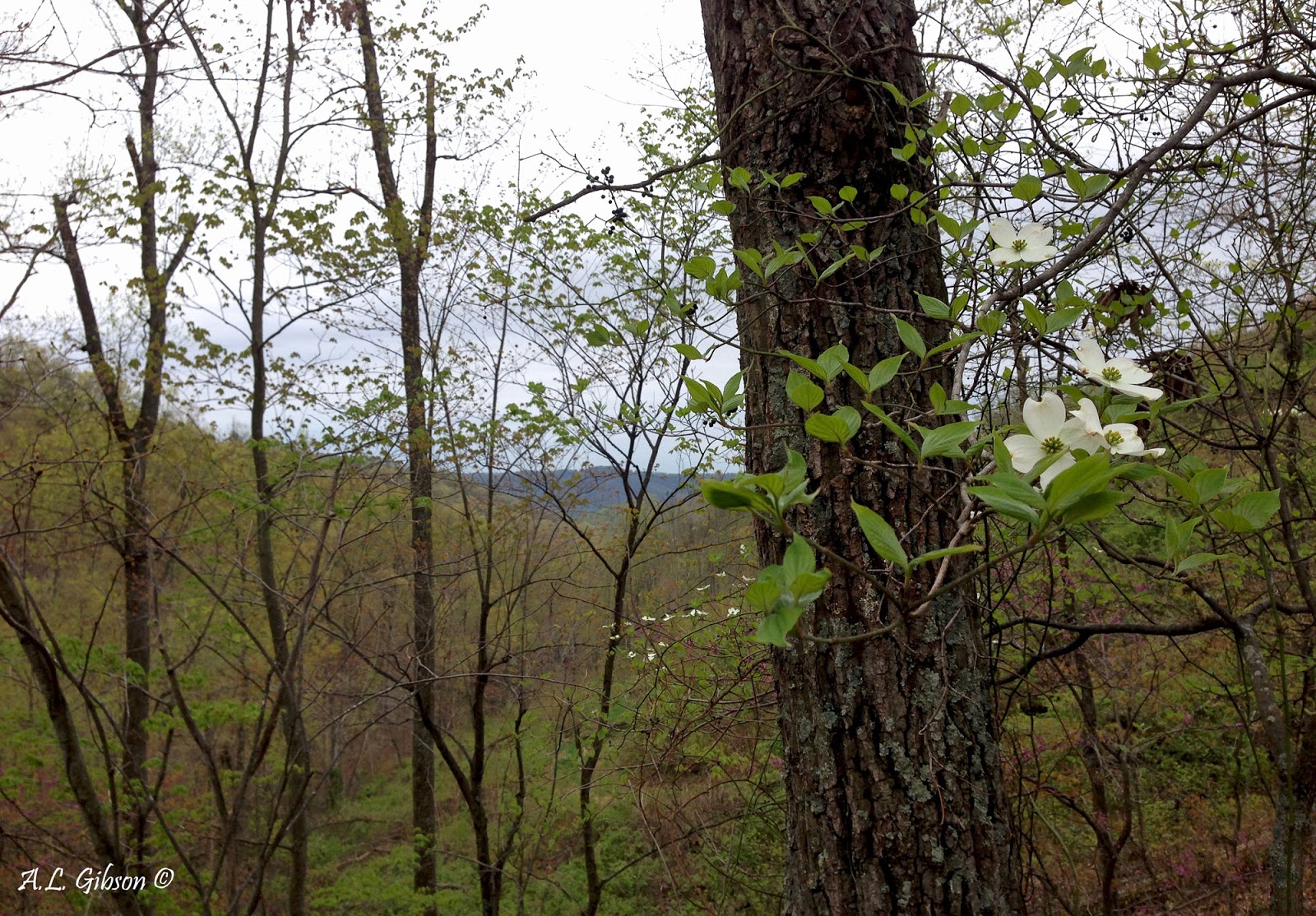
The cooler temperatures and rain might have quieted the birds but they did wonders for my floral friends.  Flowering dogwood, redbud, wild plums and serviceberry painted Shawnee's roadsides with their respective shades of cream, white and pink.  There's just something about the isolated, remote feeling of the forest's winding dirt roads as they take you along the ridge tops and down into the hollers.

Scarlet paintbrush (Castilleja coccinea) blooming in an Adams Co. cedar barrens

I arrived to the region early in the afternoon on Friday to do a bit of personal botanizing and birding before I was needed at the lodge.  I couldn't resist the temptation of hitting a few choice spots in Adams County for their rare and unusual inhabitants.  The globally rare dolomite cedar barrens were ablaze with scarlet paintbrush (Castilleja coccinea) in all their seasonal glory.
Flowering dogwood back dropped by the rolling hills of Shawnee

Don't let me fool you into thinking the birds were a complete and total bust.  Both my Saturday and Sunday field trips were rewarded with some great species and moments.  The best had to be a woman on Saturday wishing with all her might she'd get to see even a fleeting glimpse of the elusive Kentucky warbler; a long-awaited life bird for her.  Not more than five minutes later a male that had been singing from deep in the brush and tangle of the woods came out and perched himself in clear view for the entire group. Needless to say, the aforementioned woman was breathless in wonderment afterwards.  That's a sight any guide loves to see!

The rare vernal iris (Iris verna) blooming profusely along the forest's roadsides

One of the area's quintessential spring wildflowers was just starting to come online during the conference in the rare vernal iris (Iris verna).  Many folks think of summer and wetlands when irises are mentioned but this particular species loves the rocky, dry soil of Shawnee's sun-drenched ridge tops and roadsides.

Eastern Tiger Swallowtail nectaring on the ephemeral blooms of wild plum (Prunus spp.)

While cruising Shawnee's back roads during Friday's warm, sunny conditions, I came across numerous wild plums (Prunus spp.) in perfect flowering shape.  The air was heavy with their sweet scent and could be detected from hundreds of feet away with the nose alone.  I wasn't their only admirer as the plums were abuzz with dozens of bees and butterflies all looking for a taste of nectar.

Spotted Mandarin (Prosartes maculata)


Another of Shawnee's threatened floral denizens in full bloom was the delicate spotted mandarin (Prosartes maculata).  Their creamy white flowers hang like little lanterns under an emerald green umbrella.  A close look at the inside surface of their petals reveals a gorgeous smattering of magenta polka dots unlike anything else in Ohio's flora.

Pink Lady's Slipper (Cypripedium acaule)

As if the spotted mandarins and vernal irises weren't enough to wow my groups during breaks from our binoculars, Mother Nature had one more wildflower surprise up her sleeve in some pink lady's slippers (Cypripedium acaule).  I didn't expect to find any in this good of shape just yet, especially considering the last week's cooler weather but there this trio was in all their orchid splendor.  The program I gave this weekend was about Ohio's native orchids (fathom that one), so it was rewarding to be able to share these in the flesh with my group.

Sunday's group with their binoculars peeled along the forested ridge top roads of Shawnee

Sunday eventually cleared and warmed into a fine specimen of a spring day.  I had the added pleasure of close friends and phenomenal naturalists, Bob Scott Placier and Daniel Boone join me in leading this troop through Shawnee.  The birds responded accordingly to the improved conditions with better movements and vocalizations as the day waned.  Feathered highlights from the weekend included: scarlet tanager, wood thrush, purple finch, yellow-throated vireo, blue-headed vireo, sharp-shinned hawk and warblers (yellow-throated, yellow-rumped, black-throated green, cerulean, Kentucky, worm-eating, black-and-white, ovenbird, hooded, prairie, blue-winged, pine and redstart).

Birds Foot Violet (Viola pedata)

The theme of my hikes for the weekend was "Birds & Botany", so what could be better than getting the proverbial two birds with one stone in the birds foot violet (Viola pedata).  This state threatened species is arguably the most aesthetically exciting of Ohio's nearly 30 species of violet and they could not have looked better during our romp through Shawnee.

Shawnee enveloped in a steady rain

Fortunately, the rain didn't really hit and stick with us until towards the end of our time in the field on Saturday.  Regardless, I don't think I can really ever curse the rain this time of the year.  Without its life-giving powers there wouldn't be any wildflowers or birds to admire and spend the weekend chasing.  Rain is just fine by me and even gives the landscape a beauty all its own.

Female (L) and male (R) cones of the eastern hemlock

Even the minutiae of spring returning is something to behold.  Shawnee's eastern hemlocks (Tsuga canadensis) were doing their thing during our visit with their ephemeral yellow male pollen cones and adorable little female cones.  The male cones will quickly waste away after releasing their pollen, while the female cones will hang around for several years post maturity.  An interesting fact on gymnosperms is the very long temporal separation of pollination and fertilization.  It can take months for the sperm cells from the deposited pollen to reach the female cone's ovules and months more to mature into a seed.  Nature truly is all a matter of patience.

Oddly patterned common blue violets (Viola sororia) in Shawnee

Another floral oddity I enjoyed sharing with my group was a particular patch of common blue violets (V. sororia) that always display an interesting color pattern on their flowers.  I've witnessed these exact plants for several years running now and they always exhibit this strange, almost leucistic-like phenotype.  Definitely a fun twist on an otherwise common and forgettable plant.

Your blogger and the current/former* state champion yellow buckeye

I'll end this post in the same way I ended my memorable weekend down in Shawnee with one impressive specimen of a tree.  This particular yellow buckeye (Aesculus flava) has seen many winters melt into spring; so many in fact it was once (and perhaps still is?) the largest known tree for its species in the entire state.  Whether or not its title is intact is a bit moot for me.  It's a fabulous example of nature's work when given the time and opportunity to grow, grow, grow.

I can't begin to thank my hike's participants enough for their enthusiasm and thirst for the treasures of the outdoors.  Everyone's attitudes remained positive and cheerful during the entire weekend despite the weather.  I think it's safe to speak for everyone when I say we all had a great time and I'm already looking forward to future events with the OOS.

- ALG -

Tuesday, May 7, 2013

Flora-Quest Weekend 2013 Rewind

Another Flora-Quest weekend has come and gone and what an exciting weekend it was!  Shawnee state forest and the nearby Edge of Appalchia preserve system played host to well over 100 people with interests ranging from wildflowers and birds to moths and amphibians in this seventh installment of the popular spring event.  It was a fantastic chance to get out into the forests for the best of southern Ohio's spring wildflower shows and soak in its beauty with others who share in my passion for the outdoors.  Even better is the camaraderie and catching up with old friends I haven't seen in some time and the opportunity to finally meet others in person for the first time.  It's just an overall incredible atmosphere your blogger is quite lucky and fortunate to be a part of.

Scenic look out across the rolling hills of Shawnee state forest 

This was my second year in a row being a trip co-leader and I couldn't have asked for a better partner in the phenomenal and well-known nature photographer, Ian Adams.  I had never met Ian before but after just one day out in the field with him, I think I can speak for the both of us that a friendship was quickly kindled.  His eye for capturing nature with the camera lens is second to none and he's quite the naturalist as well with a great depth of knowledge and understanding about our natural world.

Our group was largely made up of folks who wanted to center on photography and soak up the tips, techniques, and tricks Ian (and myself to a smaller degree) had to share.  With being a trip leader, I largely left my own camera in its case and instead wanted to focus on educating and leading my group efficiently and without the distraction.  I did however use my iPhone to snap a number of pictures of what we saw and am quite pleased with the way most of them came out.  As a result just about all the photos used in this post were taken with my phone; which goes to explain why my hands and/or fingers are in some of the shots.  The iPhone can have a hard time focusing on smaller subjects in the foreground and using your hand as a backboard can help make the sensor's focusing job that much easier.  That all being said let's jump into some of the floral highlights of Flora-Quest weekend 2013!

Flowering dogwood along a flowing stream in Shawnee state forest

First thing worth saying is what a difference a year can make.  This time last year had the forest and plants looking like late May/early June and the trees completely leafed out; which was certainly not the case this time around.  Things were all just about right on time with many of the Flora-Quest classics all present and in full bloom.  The snow white blossoms of the flowering dogwood and wild plums along with the vibrant pinkish-reds of the red bud carpeted the forest under story in their typical stunning fashion.

Dwarf crested irises (Iris cristata) in full bloom along Shawnee's roadsides

Instantly noticeable all along the forested roads of Shawnee were the regal purple carpets of dwarf crested iris (Iris cristata) in full bloom.  The underground rhizomes do their jobs well and quickly spread out to give the forest a seemingly endless supply of the short-lived flowers, perfectly timed up with our arrival.

Dwarf crested irises (Iris cristata)
Spectacular double-flowered iris


Upon closer inspection of their delicate flowers, the dwarf crested iris can truly be held among the floral elites of spring.  The soft shade of lavender they exhibit is contrasted stunningly by their petals honey yellow markings.  Our group was fortuitous enough to come across a spectacular double-flowered form that was most likely the result of some genes going a bit haywire.

Albino dwarf crested irises

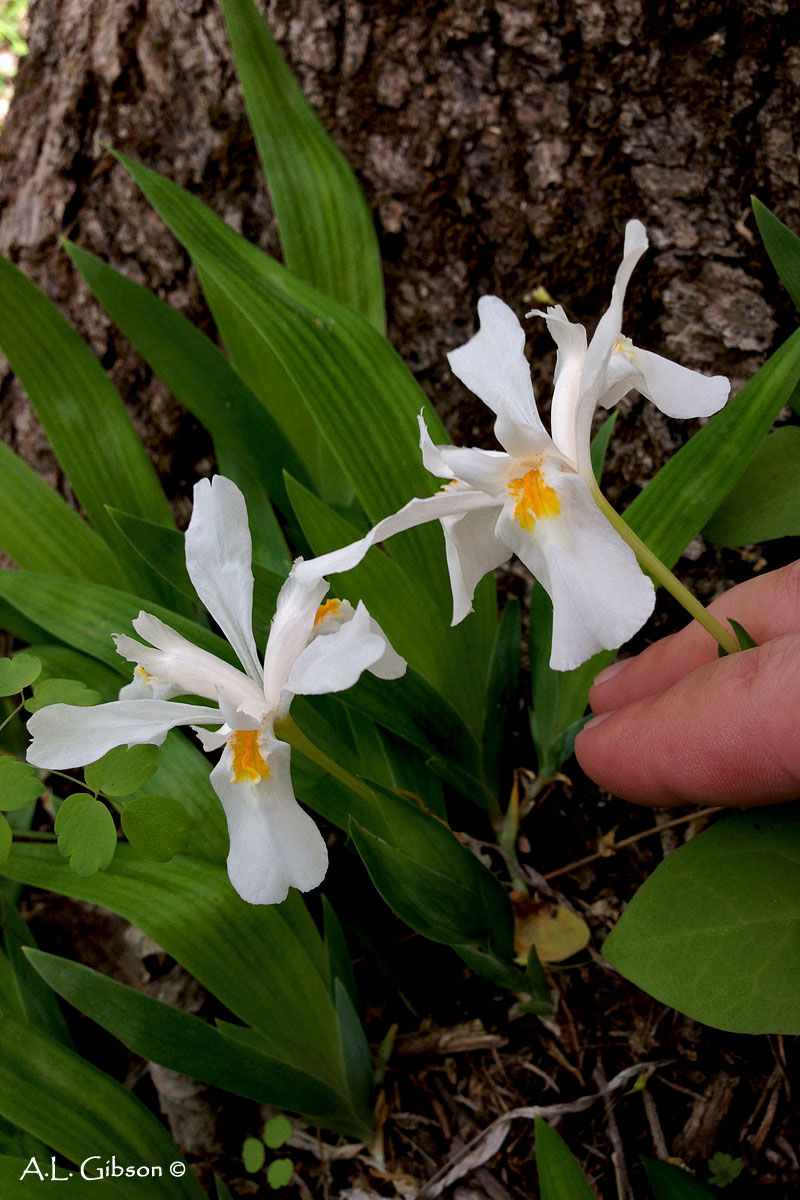
Perhaps less rare but nigh on equally pleasing were some albino forms of dwarf crested iris.  Their shades of purple had been traded in for the purest of white with only the golden markings left behind to add any accentuation.

Large yellow lady's slippers (Cypripedium pubescens)

It's nothing revolutionary in admitting the promise of wild orchids to be one of the main draws to each annual Flora-Quest event.  This year found them waking up a bit late and more slowly than in years past but still putting on as magnificent a show as ever.  Large yellow lady's slippers (Cypripedium pubescens) never fail to impress and get a group's camera shutters clicking in unison.

Spotted mandarin (Prosartes maculata)
Pawpaw flowers (Asimina triloba)


One rarity that was completely absent from last year's spectacle was the evanescent blooms of the spotted mandarin (Prosartes maculata).  Their creamy white petals are feverishly spotted with tiny purple speckles much like if it was suffering from a case of the flower chickenpox.  On the opposite end of the scarcity spectrum, the malodorous pawpaw (Asimina triloba) was putting on its own show with their charming matte scarlet blooms.

Luna moth (Actias luna)

It wasn't all wildflowers for our group when we stumbled across a feeble luna moth while out and about.  Ian hypothesized its lackadaisical attitude and out-in-the-open location was foretelling that its job of mating had been completed and its life cycle come to an inevitable close.

Black-legged tick (Ixodes scapularis)

Another invertebrate critter we encountered while in Shawnee was hardly as welcome and grandiose as the luna moth and much more sinister.  The small speck climbing up your blogger's finger is the infamous black-legged tick, which also goes by the name of deer tick.  Of the three species of tick that call Ohio home (deer, dog, and lone star) only the deer tick can carry Lyme's disease; so naturally they seem to get the most attention.  Its smaller size and orange-colored back are helpful ID characteristics.  It's becoming much more prevalent in the southern/southeastern/eastern part of the state so be on the lookout for it!

Early pink azalea (Rhododendron prinophyllum)

An instant classic and inducer of many "oohs" and "ahhs" is one of my all-time favorite woody plants: the early pink azalea (Rhododendron prinophyllum).  A completely hidden and inconspicuous plant any other time of the year, early May is this heath family member's time to shine!  If you think its looks are good, definitely take the time to give it a whiff.  Its intoxicating aroma will impress your nose as much as its perfect pink blossoms please your eyes!

Dry hillside full of vernal iris
Vernal iris (Iris verna)


In addition to the aforementioned dwarf crested iris, Shawnee is also home to the state-threatened and absolutely breathtaking vernal iris (Iris verna).  Few other wildflowers can eclipse the electric blue/purple hues and royal demeanor of its blooms.  Most iris species are associated with wet-moist soiled situations but the vernal iris is a high and dry plant that prefers the xeric, sun-drenched ridge tops and rocky outcrops of extreme southern Ohio.

Bird's foot violet (Viola pedata)

It just wouldn't be spring in Shawnee without the annual display of our state's most dazzling of violet species: the bird's foot violet (Viola pedata).  Their large, showy flowers stick out like a sore thumb against the barren ridges and dirt banks.  The ones pictured are of the bi-colored form and seem to outnumber the typically more traditional light lavender monochrome plants.

Black-edged sedge (Carex nigromarginata)

I wouldn't be a real botanist if I didn't take the time to share with my group one of my favorite sedge species now would I?  I may have had a few odd looks and some scratching their heads as I gushed over the beauty and my love for the black-edged sedge (Carex nigromarginata), but they did agree it was a rather handsome little plant.

Large, leafing out tuliptree
Showy orchis (Galearis spectabilis)


While orchids like the showy orchis (Galearis spectabilis) showed off their glamour on the ground below, high in the tree tops our group was spoiled with a diverse array of fantastic birds.  Scarlet tanager, wood thrush, worm-eating warbler, cerulean warbler, hooded warbler, ovenbird, northern parula, American redstart, and whippoorwill is just a small sampling of the feathered friends we encountered.  Our group was even so lucky as to come across a gorgeous, healthy-looking coyote deep in Shawnee during Sunday morning's outing.  It quickly disappeared into the trees but those few fleeting seconds were special indeed.

Whorled pogonia (Isotria verticillata

One of the most fun plants last year's event missed out on was thankfully just coming into its prime this time around.  I was forced to show the swelling seed pods of the whorled pogonia orchid (Isotria verticillata) to my group last season but I was much more successful this weekend!  This infrequent orchid prefers the dry, acidic upland soils of oak/pine woods; often in association with mountain laurel (Kalmia latifolia) and other members of the Ericaceae family.

Whorled pogonia (Isotria verticillata

The whorled pogonia looks like a mythical beast out of the folklore of Greece or Rome with its spreading sepals and gaping "mouth"; waiting to consume its next unassuming victim.  It may not have the same following and fan club as the next orchid species but it has always been one of my favorites for its unique and chimerical appearance.

Pink lady's slipper (Cypripedium acaule)

Growing in close proximity to the whorled pogonia and sharing in its love for the dry, acidic mixed oak forest was some impressive clumps and patches of the pink lady's slipper (Cypripedium acaule).  I've seen this particular orchid dozens of times before in years past but it just never gets old getting reacquainted with their gorgeous faces each and every spring.  There's just something about them I find irresistible and I think my group easily shared in that excitement.

Black huckleberry (Gaylussica baccata)
Hillside blueberry (Vaccinium pallidum)


Two associates of the acidic oak woodlands happened to be in full bloom this past weekend and both end up producing a delicious fruit I can never get enough of.  On the left is the red bell-shaped flowers of the black huckleberry (Gaylussica baccata) with is cousin hillside blueberry (Vaccinium pallidum) flowering right alongside it. Both are members of the heath family (Ericaceae) and very common in the mountain laurel and azalea thickets of Shawnee state forest.

There's so much more I could share and wildflower pictures worth posting but if I don't stop now, I don't know that I ever could or would!  Flora-Quest proved to be once again an incredibly well put together and organized event that I think I can safely say everyone in attendance absolutely loved.  It's a shame to see it come to a close so soon but there's always next year to look forward to.  I hope to be an integral part of it once again and be leading some field trips but we'll see what possibilities it brings.  Next up on the docket is Mothapalooza June 14-16, being held right here in Shawnee state forest and on the Edge as well.  Hope to see some of you there!

Wednesday, May 2, 2012

Spring in Shawnee State Forest

There are few better places to enjoy spring in full swing than the majestic rolling hills and deep shaded hollows of Shawnee State Forest in Scioto county.  It has been dubbed by many as the "Little Smokies of Ohio" for its similarity in appearance and biodiversity to the famed national park further to the southeast.  At over 60,000 acres it is Ohio's largest state forest and provides the public with hiking, bridle trails, camping, boating, birding, fishing and hunting opportunities.  For someone like myself it's the long and diverse list of flora that beckons me within its confines.  Shawnee is home to many of the state's great plant rarities among the countless other uncommon and interesting species scattered throughout.  A slow and careful drive down the forested gravel roads come April and May will reward the ardent observer with stunning displays of wildflowers and ferns that are nigh on impossible to beat elsewhere in the state.

Birdsfoot Violet (Viola pedata)

Making your way along select areas of forest road passing through dry and sun-drenched ridge tops may result in the lucky glimpse of a most royal shade of purple.  The Birdsfoot Violet (Viola pedata) is a threatened species in Ohio with a good amount of its remaining populations occurring in Shawnee.  An added bonus is many of these violets exhibit a gorgeous bi-color appearance as seen above.  Everywhere else I've ever seen this species it has always been a uniform light purple color.

Rose Azalea (Rhododendron prinophyllum)

If you recall a post I did a few months back on the rosebay rhododendron, I mentioned there were other additional native species to be found, this being one of them.  Rose Azalea (Rhododendron prinophyllum) is another state-listed species that calls Shawnee home in small pockets of acidic mixed oak woodland.  The flowers can range from nearly white to dark pink and are extremely fragrant.  It's rare to be the only living creature attracted to its beauty and aroma.  These plants are often abuzz with bees and flies all vying for a taste.

Rose Azalea (Rhododendron prinophyllum)

You have a relatively short window of opportunity each year to search out and discover small patches and colonies of these native shrubs.  Without the aid of their instantly noticeable and showy flowers you'd be hard pressed to find this any other time of the year.  Looking for other members of the heath family (Ericaceae) such as mountain laurel (Kalmia latifolia), low bush blueberry (Vaccinium pallidum) and black huckleberry (Gaylussacia baccata) all growing together is a great place to start as I commonly see all those species in association with rose azalea.

Fire Pink (Silene virginica)

Sticking with the 'too hard to ignore' category of plants, Fire Pink (Silene virginica) is a frequent wildflower along Shawnee's roadsides come late April and May that is hard to ignore.  Not many other members of our native flora show off such a brilliant scarlet bloom which in turn do wonders in attracting the ruby-throated hummingbird, its primary pollinator.

Vernal Iris (Iris verna)

Another dweller of the xeric dirt banks and ridge tops in Shawnee is one of my most anticipated and beloved of spring's displays.  Vernal Iris (Iris verna) stands apart from its more water-appreciating kin and proudly boasts its dazzling flowers along sunny, open spans of rocky and well-drained soil in acidic oak woodlands.

Vernal Iris (Iris verna)

It's hard to believe something so delicate looking can survive and even flourish under such harsh habitat and environmental conditions.  It's toughness and determination to persevere and persist is evenly matched by its impressively good looks.

Large Yellow Lady's Slipper (Cypripedium parviflorum var. pubescens)

One of the surprises Shawnee may share with you is the fortuitous encounter with large yellow lady's slippers (Cypripedium parviflorum var. pubescens).  You never know when you may just happen across a patch blooming alongside the road.  Just the other day I pulled the Subaru over to get out and admire a rather large grouping of two-flowered cynthia (Krigia biflora) when I noticed a scattering of them mixed in amongst the trees.

Fringe Tree (Chionanthus virginicus)

The sprawling, contiguous forests of Shawnee are home to many rare and intriguing plant species but few are more unique and attention-grabbing than the Fringe Tree (Chionanthus virginicus).  Much like the aforementioned rose azalea, these large shrubs or small trees are difficult to seek out when not brandishing its quite conspicuous flowers.  A member of the olive family (Oleaceae), this unusual woody plant is in the same family as our ash trees (Fraxinus spp.).

Fringe Tree (Chionanthus virginicus)

The four-petaled flowers hang in large clusters off the new growth twigs and when in sunny situations can really put on an incredible display.  The flowers are very fragrant and can quickly call you to their attention when passing underneath a large specimen.  Rare in Ohio, it is restricted to the southernmost counties where it is at the northern fringe of its range (pun intended).  It becomes much more common in the southeast where it is often dug and planted for its ornamental value.

Spotted Mandarin (Prosartes maculata)

Another rarity seemingly sentenced to seclusion in the depths of Shawnee and the more or less next door Edge of Appalachia preserve is one of the most jaw-dropping spring wildflowers you're likely to find.  Spotted Mandarin (Prosartes maculata) is listed as threatened in Ohio with extant populations only left in Adams and Scioto counties where it occupies mesic slopes and ravines of mature mixed mesophyitic woods.  This plant is notorious for being hard to catch in perfect bloom with the petals and sepals only lasting a couple days before falling off at the slightest touch or breeze.  There's just no other wildflower like it with its creamy white petal's interior meticulously speckled with purple spots.

Dwarf Crested Iris (Iris cristata)

Perhaps one of the more common wildflowers lining the roads, streams and lower slopes of Shawnee is the charming Dwarf Crested Iris (Iris cristata).  Some people may be quick to label these as the previously shown vernal iris but it's important to take a look at the 'crest' on the upper surface of the sepals.  On the dwarf crest irises pictured above, you can see the crest is predominately colored white with some yellow mixing in closer towards the interior; while the vernal iris has almost an entirely yellow colored crest.

Dwarf Crested Iris (Iris cristata)

I'd always seen pictures and heard the dwarf crested iris can sometimes be found in an all-white albino form but had never had the personal satisfaction of finding one myself...until the other day.  The uniformly snow white petals and sepals are only blemished by the small yellow crests.

While there are literally hundreds of other wildflowers I could share to demonstrate the beauty and splendor of Shawnee state forest's spring display I will end it here and hope you enjoyed the ride through one of Ohio's greatest natural treasures.  I highly encourage you to take an afternoon or weekend day to explore the vastness and diversity of Shawnee.  All of these plants are visible and findable alongside the roads along with so much more.  It just takes patience, your attention and sometimes a little luck!