Showing posts with label Top Ten List. Show all posts

Friday, February 22, 2019

Top Ten Life Plants of 2018

Hello? Tap, tap, tap...this thing on? Whew, it's been a minute since I've been on here. Just over a year, actually. Definitely the longest hiatus since this blog's inception back in the fall of 2010. Speaking of which, I can't believe its been eight years since I sat down and wrote my first post. It seems so much shorter and longer ago at the same time. Weird how time works isn't it?

A quick update on things before we dive into the subject matter at hand. First off, I got married to my long time partner, Kara early last year! Definitely the highlight of 2018 for me! We also moved to Columbus this past summer after nearly a decade of living down in the rolling hills of southeast Ohio. I miss the Athens area and all my favorite haunts but it's nice to be centralized and enjoying my own office in the ODNR headquarters in town. Happy to report I'm still working as a field botanist and ecologist for the Ohio Division of Natural Areas & Preserves and loving most every minute of it. That pretty much catches you, my ever-patient and faithful readers (I mean, how many of you are actually left these days anyways haha?) up on the major happenings in the Buckeye Botanist's life.

I'd also like to take this time to dedicate this post to Keith Board, a good friend of mine and spirited fan of my writing and photography. Keith passed away last month after an extended illness. He was only 58. Keith was a sensational and accomplished botanist and naturalist in the northern Indiana and Chicago region and he will be greatly missed by countless individuals who's lives he touched. He was the most positive and encouraging person you could hope to know. Rest in peace, Keith.

Back to business. It's that time again to sit down and write up what's come to be a yearly favorite of mine and a post I'll always make time for: this past year's top ten life plants! It's a wonderful way to reminisce on a growing season's worth of discovery and adventure and 2018 had plenty.

2018 was an eventful year with exciting happenings both in my home state of Ohio and outside her borders. My aforementioned work kept me busier than ever with some noteworthy discoveries that I certainly hope to share on here one day. I also made treks down to the Florida panhandle back in early May, as well as a once-in-a-lifetime loop trip around the entirety of Lake Superior in July! I'd love to document both excursions, especially the Superior trip in blog form one day, too. Both adventures provided countless unforgettable botanical moments and finds. Honestly, all ten species you'll see below come from those two forays. I made acquaintances with my fair share of new Ohio flora this year but none managed to make the list this time around. All this made for the most difficult top ten list I've had to put together in the 4-5 years I've been doing this post.

All that being said let's begin the countdown of my favorite life plants from a memorable spring, summer, and fall of botanizing throughout eastern North America...


#10  "Red" Yellow Pitcher Plant (Sarracenia flava var. rubricorpora)


Longleaf Pine savanna community near Sumatra, Florida

2018 life plant #10 takes us down to Apalachicola National Forest on the Florida panhandle. My wife and I took a belated honeymoon down to the beach in early May for a week of lazy cocktail drinking and seafood eating. However, she knows who she married and I had to get out into the wild from time to time; she was even a good enough sport to come with one day! In one particular longleaf pine savanna community was an extra diverse display of flora and home to plant #10...

Sarracenia flava var. rubricorpora

I love any and all of North America's native pitcher plants but there's something about this very rare and beautiful red form of the yellow pitcher plant (Sarracenia flava var. rubricorpora) that really speaks to me. Legend has it this unique color morph only occurs in the wild on the Florida panhandle. It's a highly sought-after variety in the carnivorous plant trade, which makes seeing it actually out in the wild an extra special thing. I'd had the luck of seeing typical yellow pitcher plants on several occasions, including countless times on this trip but these blood red beauties stole the show!


#9  Cahaba Paintbrush (Castilleja kraliana) &
Alabama Pinkroot (Spigelia alabamensis)


Ketona Dolostone glades of the Bibb County Glades in central Alabama

2018 life plant(s) #9 take us to a quick stop in central Alabama to see a site I've drooled over for many years. The famed Bibb County Glades deserve and will get their own dedicated post one day but for now this very brief introduction and appetizer will have to do. This fascinating habitat sits on a unique form of dolostone that is extra pure and allowed for some remarkable plant evolution to take place. In fact, eight species of plants to be found in these glade complexes occur nowhere else in the world! Two of which are featured below. And, no, I couldn't decide on just one.

Cahaba Paintbrush (Castilleja kraliana) G2
Alabama Pinkroot (Spigelia alabamensis) G1


Kara and I stopped at the Bibb County Glades on our way down to Florida to check things out, even if for only a precious and hurried few hours. We managed to catch a number of things either still hanging on or just starting to bloom as the season transitioned from spring to summer. That included the two endemics featured here. On the left is Cahaba paintbrush (Castilleja kraliana). It's closely related to the widespread scarlet paintbrush (C. coccinea) but diverged from it in this unique scenario and developed different pollinator/pollen vectors due to its changes in bract coloration. On the right is Alabama pinkroot (Spigelia alabamensis), and perhaps the glade's most famous denizen. Like the paintbrush, it evolved in this specialized habitat and only occurs in these glades and nowhere else on Earth. It was just starting to bloom and open its corollas during our visit. If it looks vaguely familiar to you it may be because you saw it on the side of a U-Haul truck! Can't say any other plant I'll feature on this blog has that same distinction. I saw so, so much more in these glades and will share it all in their own post one day. Hopefully...


#8  Coastal Plain Spreading Pogonia (Cleistesiopsis oricamporum)


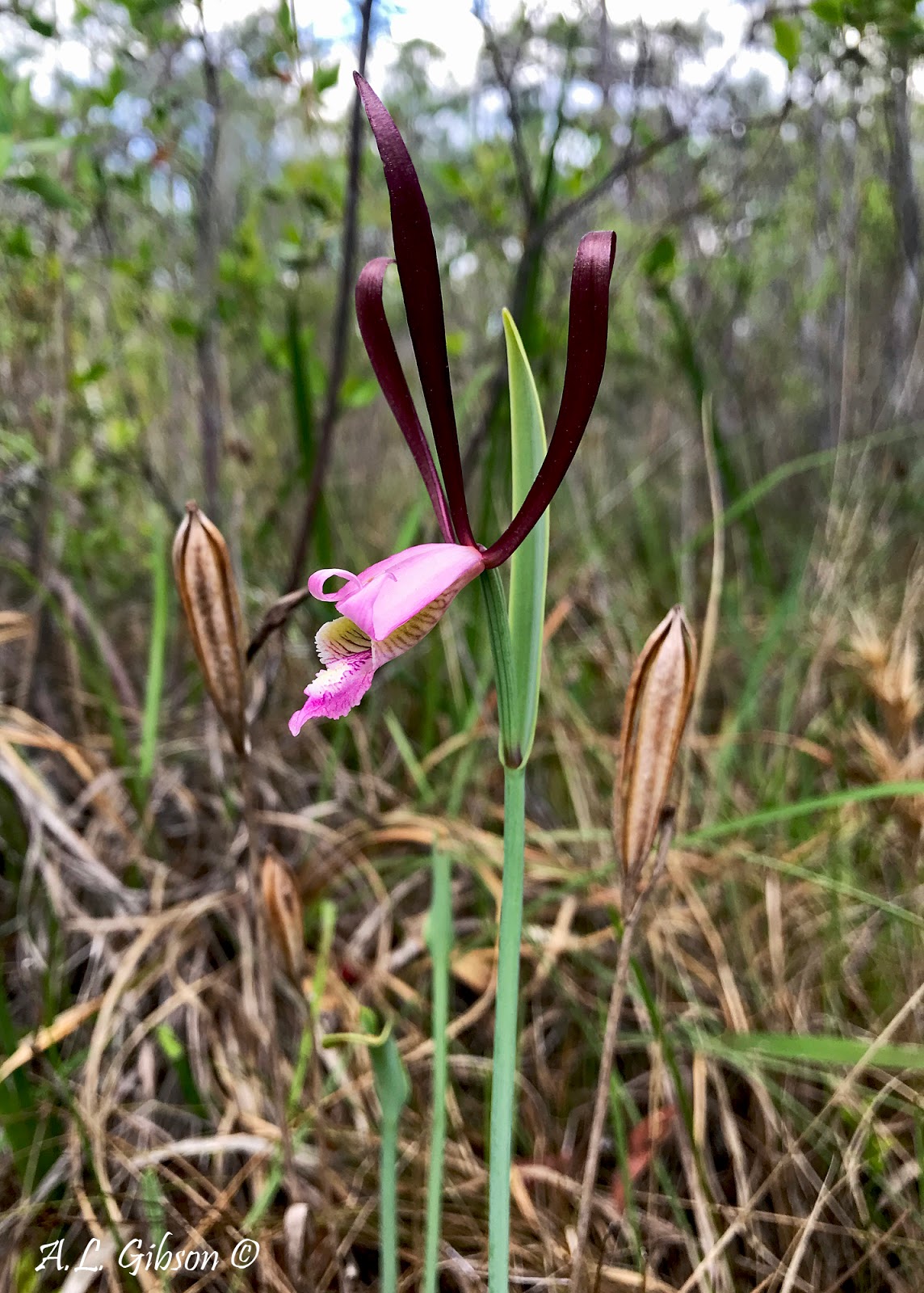
Coastal Plain Spreading Pogonia (Cleistesiopsis oricamporum)

It wouldn't be a proper "top ten life plants" countdown without an orchid's first appearance. And if you know me even a little bit you'll also know this is hardly the last orchid that will appear on this list. Coming in at #8 is the coastal plain spreading pogonia (Cleistesiopsis oricamporum). It's another Florida panhandle discovery but the last time we'll be in this amazing botanical paradise on this countdown.


Coastal Plain Spreading Pogonia (Cleistesiopsis oricamporum)


If I had a dollar for every one of these orchids I saw in the open longleaf pine savanna communities I was botanizing in, I'd be retiring much earlier than planned. They were quite common and an especially nice find when growing in large colonies of pitcher plants, as seen in the above left photo. An additional wow factor from this orchid was its deliciously sweet fragrance that was reminiscent of vanilla to my nose.


#7  Intermediate Sedge (Carex media)


Intermediate Sedge (Carex media) on the rocky north shore of Lake Superior

If orchids are my favorite plants then it would only be right to have #7 represent my other favorite plant family: the sedges! On my incredible Lake Superior loop trip we came across well over 100 species of sedge, quite a few of which were lifers that I'd never seen before. The best and most anticipated of all was this little fella. The intermediate sedge (Carex media) is a circumboreal species found throughout the northern hemisphere but quite the rarity as far south as the northern shorelines of Lake Superior. Yes, you heard that right. This plant considers that to be the "south".


Closeup view of the fruiting spike of intermediate sedge (Carex media)

Intermediate sedge was the number one Cyperaceae life species I wanted to come across. Our group managed to cross it off the list on the precarious rocky shorelines of Superior in the Grand Marais, Minnesota region. It's a dainty thing but has a lot of charm and character in its light green coloration contrasted by dark pistillate scales. It reminds me of a micro version of Buxbaum's sedge (C. buxbaumii), which happens to be one of my most beloved sedges. This one may not make many other folk's top life plant list but it was a no-brainer for me!


#6  Common Moonwort (Botrychium lunaria)


Common Moonwort (Botrychium lunaria)

Much like orchids and sedges, this countdown wouldn't be complete without a fern making an appearance. No fern made a bigger splash with me in 2018 than #6 and the common moonwort (Botrychium lunaria). When it comes to moonworts you're dealing with tiny plants and endless frustration. They are a painfully difficult group to get a handle on due to so many looking so similar to one another. However, the common moonwort stands out with its unique crescent moon-like leaves on the tropophore (sterile blade).


Common Moonwort (Botrychium lunaria)

Speaking of small, I think the photo above with one of these moonworts framed against my hand shows just how tiny we're talking here. The common moonwort is found throughout the world but is most frequent in the northern latitudes. Our Lake Superior crew came across this moonwort and 2-4 other species in a sterile, sandy habitat along an old railroad up on the north shore. The exact number and identity of all the moonworts we found at this spot remains unknown and very aggravating!


#5  Oval-leaved Milkweed (Asclepias ovalifolia)


Oval-leaved Milkweed (Asclepias ovalifolia)

We've reached the halfway point on my countdown of 2018's top ten life plants. I hope you've enjoyed the list thus far. It's only going to get more interesting and aesthetic from here, at least in my opinion. Dropping in at #5 on the list is the oval-leaved or dwarf milkweed (Asclepias ovalifolia). Not to sound like a broken record or someone who loves everything but the milkweeds are another group that hold a special place in my heart. This species was the prime target during a stop at a sand barrens community in northern Wisconsin, where this milkweed is getting to be exceedingly rare.


Closer look at the flowers of the Oval-leaved Milkweed (Asclepias ovalifolia)

The sand barrens we visited and thankfully found our target in has an interesting recent story. It resides on state land and was planted to red pine several decades ago for future timber. As the pines came in they shaded out the barrens flora and pushed them into the seed bank. Flash forward to a handful of years ago and the state logged this pine plantation and opened the habitat back up. With the sudden lack of suppression from the pines the barrens flora, including this milkweed sprang forth and had their day in the sun once more. Unfortunately, the site has been replanted to pine and the milkweeds and other sun-loving plants are once again getting pushed back.


#4  Encrusted Saxifrage (Saxifraga paniculata)


Encrusted saxifrage (Saxifraga paniculata)

When I first laid eyes upon #4 I knew I was witnessing a remarkable plant. I'd never even heard of encrusted saxifrage (Saxifraga paniculata) before but was instantly taken by its beauty and tenacious nature. This stunning wildflower is an alpine and subarctic specialist that barely makes it far south enough to occur along the rugged, unforgiving north shore of Lake Superior. It's much more common in NE Canada, as well as in Greenland, Iceland, and Norway. That's one tough plant!


Succulent-like basal leaves of encrusted saxifrage (Saxifraga paniculata)
Encrusted saxifrage (Saxifraga paniculata) on its rocky shoreline home 


The fleshy, off-white colored petals of their flowers are delicately polka-dotted with black flecks and the first thing that drew my attention. However, it was their succulent-like basal rosettes growing right off the rocks that won me over. The tips are tinged white from their pores secreting lime taken in from their calcareous substrate, hence the name 'encrusted'. I'm amazed they survive the brutally cold and ice-covered winters on their shoreline habitat but life always finds a way!


#3  Cahaba Lily (Hymenocallis coronaria)


Cahaba Lily or Shoals Spider-lily (Hymenocallis coronaria)

We're down to the final three most meaningful finds and they all bring back very fond memories. At #3 is the globally rare Cahaba lily or shoals spider-lily (Hymenocallis coronaria). This was another stop of Kara and I's on our way down to the Florida panhandle and fortuitously very close to the Bibb County Glades. These wonders occur in the shallow flats of the Cahaba River National Wildlife Refuge and were just starting to bloom during our visit. A month or so later and countless thousands bloom en mass at this location.


Cahaba Lily or Shoals Spider-lily (Hymenocallis coronaria)


Getting out to the lilies was a bit treacherous and involved careful wading. The rocks were slick as snot and the deeper channels acted as a maze I had to solve. Kara was fine with admiring them from the shorelines and was waiting for me to slip and fall in the river haha. The Cahaba lily is only known from few watersheds in Alabama, Georgia, and South Carolina where it has severely declined due to dam construction flooding out its required specific habitat. I certainly hope to get back down to see this wildflower at its peak one day but I'll settle for the blooms I did see without complaint for now!


#1B  Small Round-leaved Orchid (Amerorchis rotundifolia)


Small Round-leaved Orchid (Amerorchis rotundifolia)

I'll right off the bat say that the final two plants on this list are interchangeable. There's no real way I could decide between the two and finally seeing both with my own two eyes meant everything to me plant-wise in 2018. That being said at #1B is the mythical, the magical, the marvelous small round-leaved orchid (Amerorchis rotundifolia). I've been chasing wild orchids for almost a decade now and seen 90+ of North America's native species but this one...this was one of my holy grails. One I'd spent hours daydreaming about seeing. So when this Lake Superior trip was put together this was near or at the top of everyone's list. I'll be sharing and detailing a lot more about this species when I do my Superior series as there's a lot more than meets the eye about this spot and orchid...


Small Round-leaved Orchid (Amerorchis rotundifolia)


I finally made acquaintances with this long desired orchid within the depths of a secluded rich cedar swamp in Sleeping Giant Provincial Park, Ontario. There, our group came across hundreds in perfect flower and it was like being in a lucid dream. We'd found them the day before at a site further north and inland but the recent heat wave had cooked them and they were well past prime shape. Fortunately, Lake Superior acts as a refrigerator around the Sibley Peninsula and kept the orchids at  this site in perfect shape for our visit! They were simply unbelievable and the long, slow-moving bushwhack to see them along with the liter of blood I lost to the black flies, deer flies, and mosquitoes was completely worth it. Words fail me how excited I was to witness this rarity of the northern woods.


#1A  Sparrow's Egg Lady's Slipper (Cypripedium passerinum)


Sparrow's Egg Lady's Slipper (Cypripedium passerinum)

And then there was one. We've come at last to my number one life plant of 2018 and, of course it's another orchid. In fact, every year but last year (2017) the top spot has gone to one of my beloved orchids. My Lake Superior loop trip gave me more botanical bliss than any trip I've been on before and its greatest gift of all was the sparrow's egg lady's slipper (Cypripedium passerinum). It's a tiny little plant with the delicate slipper about the size of its namesake sparrow egg. It also goes by the common names of Franklin's or spotted lady's slipper.


Sparrow's Egg Lady's Slipper (Cypripedium passerinum)


Within Pukaskwa National Park on Ontario's north shore they grew in scattered clumps on the mossy, juniper-covered stabilized dunes under pine/spruce a ways back from the active shoreline. The cool, refrigerator-like air coming off Superior helps provide a microclimate for this northern disjunct arctic orchid and how they've managed to persist so far south. This is more or less the only spot in the entire Great Lakes region this orchid still occurs. You have to travel hundreds of miles north and/or west to find them again. Interestingly, the sparrow's egg lady's slipper is self-pollinating (see: autogamous), which is unusual for a Cypripedium. You can see the ovaries already swelling/maturing with the flowers in peak shape in the accompanying photos. The photo above right shows just how miniscule the slippers and plants are! It's such an incredible orchid and one that brought long-awaited tears of joy to my eyes. I can still months later hardly believe I got the opportunity to witness their perfection in such a special place.


I hope you've enjoyed this look back on my favorite finds and life plants of 2018. I'll be curious to hear from you all on which ones were your favorites; species you have on your life lists; or experiences with them yourselves. I hope I've warmed your spirit and computer screens even a little bit as Ohio's winter trudges on. Spring is nigh, though! I heard my first red-winged blackbird singing yesterday and already seen skunk cabbage in bloom. Thanks for tuning in and reading and I hope to be back with more content in 2019!

~ ALG ~

Thursday, February 1, 2018

Top Ten Life Plants of 2017

Better late than never! That's become the theme of this blog the last few years. I always pondered why some of my favorite nature blogger's work waned so much years ago and I've come to find out for myself just how quickly and easily it happens. Life gets busy...and busier, and busier! However, it doesn't get so busy that I can't manage to sit down and write up what's come to be a yearly favorite of mine. My annual look back on the past year's top ten life plants! Additionally, it's a superb way to reminisce on a growing season's worth of adventure and discovery.

2017 was an eventful year with exciting happenings both in my home state of Ohio and outside her borders. My work as a field botanist with the Ohio Division of Natural Areas & Preserves kept me busier than ever with some noteworthy discoveries. I also made treks out to southern Illinois and eastern Missouri to visit a close botany buddy of mine; as well as up to Michigan and the Upper Peninsula. Both trips provided some unforgettable botanical moments and finds, some of which will be proudly featured here. It is especially nice to see Ohio represented on my top ten life plants list again, as over the last couple years substantial lifers in my home region have been hard to come by.

I will say that I've become a bit of a lazy botanical photographer these days and rely heavily, really almost solely on my iPhone as a camera. It takes wonderful photos and just about every single one featured in this post was shot with it. However, when viewed so large and in closer detail the images are a bit lackluster to my nitpicky self. So for those with as high a standards as me, I apologize for some photos not being as up to snuff.

All that being said, let's begin the countdown of my favorite life plants from a memorable spring, summer, and fall of botanizing throughout the Midwest.


My botanical cohort and good friend/mentor, Dan Boone at the site of life plant #10

Starting things off is a look back to late June and an especially gorgeous summer day spent within one of Ohio's most spectacular remnant grasslands. It was at this location that I finally made acquaintances with an uncommon Asteraceae member that had evaded my life list for quite some time and comes in at #10.


#10 - Pasture Thistle (Cirsium pumilum)


Pasture thistle (Cirsium pumilum) isn't what I would call rare in Ohio, but it certainly isn't common either. With most of its occurrences residing up in the northeast and eastern portions of the state, I wasn't likely to see any of it in my normal haunts in the southeast and southern reaches. It's curious it occurs at all at this particular site in south-central Ohio, but I'm forever thankful it does. Pasture thistle never gets very tall and can be a pain to see but for its stunning purple composite flowerhead. Sadly, each individual plant only gets one opportunity to show off its thistle-licious (yes, I just made that word up) flowers. Like some of its other thistle kin, this species is monocarpic, meaning it only flowers once and subsequently dies. My visit to this site was at the tail end of its blooming cycle and many plants were already dispersing their seeds on the wind. Thankfully, a lucky few were still in photogenic shape and allowed them to just make the cut!


#9 - Cut-leaved Water Parsnip (Berula erecta)


The criteria for how a plant makes this most esteemed of lists is much more than physical beauty. Some plants I find too curious, unique, and/or rare to not feel extra special about finding them. Life plant #9 fits that mold just right! The cut-leaved water parsnip (Berula erecta) is a small member of the carrot family (Apiaceae) I was lucky enough to spot while up in Michigan back in mid-July. It's much more common out West but quite rare east of the Mississippi River. It's at its easternmost and disjunct stations in Michigan and subsequently listed as a state-threatened species [S2]. It is only known to occur in about a dozen counties along Lake Michigan, where it grows in the specific habitats of cold headwater streams and seeps. This particular population was just beginning to flower in a tiny, freezing-cold spring-fed brook flowing through a white cedar swamp.


The incredible surroundings of a secluded kettle lake with surrounding bog mat in the eastern UP of Michigan

For life plant #8 let's hang around in Michigan but move further north into the Upper Peninsula. While there's not much going on in many people's eyes, the UP is heaven of earth for a botanist like me. I sincerely hope to deliver a post or three about my experiences up there and the insanity of treasures that came with it, but for now let's focus on one specific plant. A secluded and rarely visited kettle lake my friends and I visited contained the most intact and diverse floating bog mat I've ever stepped foot on. Orchids and sedges galore but the plant I was most honored to see was a teeny, tiny little rush...


#8 - Moor Rush (Juncus stygius)


What the moor rush (Juncus stygius) may lack in beauty, size, and well, interest for many folks it more than makes up for in rarity and peculiarity. This cute little graminoid is one of Michigan's more endangered plant species and currently known from less than ten extant sites. It also happens to be an overall rarity within the United States. Also known as bog rush, it's a circumboreal species found throughout the northern hemisphere but scarcely makes it south of boreal Canada in North America. Michigan's UP, Minnesota, Wisconsin, and Maine are the only extant states for it and it's damn rare in all them, too. This rush's white flower, poorly photographed in the left photo above, is actually quite showy for a Juncus when seen perfectly opened. Its capsules have a pleasing aesthetic to them as well. Sure, it's not much to look for you but to a rare plant junkie and grami-nerd like myself it's botanical royalty! 


#7a - Broad-lipped Twayblade (Neottia convallarioides)
#7b - Blunt-leaved Orchid (Platanthera obtusata)


I love the UP so much that I've decided to stay put a little longer with life plant #7. Well, to be honest there's two species for number seven because I just couldn't decide between the two and declared things a tie. During my single day on the UP my botanical cohorts and I saw 30, yes 30 species of wild orchid! A majority were in flower, too, including the two lifers featured here. On the left in the above photo is the broad-lipped twayblade (Neottia convallarioides), a painfully small orchid that we found in great numbers growing in pure sand in a forested dune along Lake Superior. Above right is the blunt-leaved orchid (Platanthera obtusata), a taxon I'd seen vegetatively a few times before but never in flower. Finding it in a dense white cedar swamp was a needle-in-a-haystack situation but fortunately one peatmoss-covered hummock had a plant or two still in bloom. The UP was kind enough to proffer me a third life orchid on this most sacred of days but we'll get to that later.


#6 - Large-flowered Fameflower (Phemeranthus calycinus)


2017's life plant #6 takes us out to eastern Missouri and a wildflower I'd long wanted to meet face-to-face. My botany buddy, Roger Beadles (Hi, Roger! I know you'll read this as one of my few remaining faithful readers!) treated me to an unusual and globally-significant habitat I'd never experienced before known as an igneous glade. There, in the sun-baked and dessicated landscape grew the large-flowered fameflower (Phemeranthus calycinus), a fascinating little succulent that couldn't be happier in such a harsh environment. It was 90+ degrees that late afternoon without a cloud in the sky and the vivid, deep-pink fameflowers polka-dotted the exposed bedrock with their intense color. Which made perfect sense, as they only open in the latter half of the day and in full-sun conditions. Even had they not been flowering, I'd still been plenty pleased to see their charming fleshy, finger-like leaves. I wasn't expecting on seeing any during my trip and it made for a most excellent botanical surprise and easy inclusion on my countdown of best life plants.


#5 - Glade Spurge (Euphorbia purpurea)


Hitting the halfway point on my countdown of 2017's top ten life plants is #5. It also has the distinction of being one of Ohio's rarest of the rare. Featured here is the odd and unusual glade spurge (Euphorbia purpurea). It's not only rare in Ohio, where it's an endangered species [S1], but globally as well [G3]. Glade spurge is currently only known to occur sparingly at about 50 sites in eight mid-Atlantic states, with Ohio being an intriguing westernmost disjunct. It grows at only two spots at one site in south-central Ohio, both on rich-mesic limestone bluffs above a small dolomite-bottomed stream. The two dozen or so plants in total rarely flower but a few appeared to have tried this season, as evidenced by the orbicular bracts produced at the apex of the stem in the above right photo. Despite being a toxic spurge, deer browse is a real and present threat to this plant. So it's no surprise our only known remnants of it are in such an inaccessible situation. The photos may not be much to look at, especially of vegetative-only material but for a botanist, at least this botanists it's a most precious member of Ohio's diverse flora. Long may it reign...or at least persist!


#4 - Triangle Grape Fern (Botrychium lanceolatum)


The final four plants on this countdown all had a big impact on my botanical year no matter their size, and believe me when I say #4 is about as small as it gets! This past late May I had the pleasure of checking a rare fern off my life list while working in the Hocking Hills region. It's the tiniest, daintiest thing you ever saw, too! The triangle grape fern (Botrychium lanceolatum) is a state-threatened [S2] species in Ohio, and something you'd better have luck on your side to find. I could hardly believe my eyes when I saw the first plant and how miniscule it was: it makes my pencil look gargantuan in the photo above right. This particular grape fern grows on rich, moist stream terraces in more mature woodlands and should hypothetically be more commonly known since that habitat type isn't exactly rare. I'd imagine its impossibly small size keeps most, even those looking specifically from ever noticing it. Triangle grape fern is an expert hider under taller vegetation, especially stinging nettle (Urtica dioica). Ouch!


#3 - Greater Round-leaved Orchid (Platanthera macrophylla)


I've whittled down my top ten list of 2017's best life plants to the last three. This is where the fun really begins if you ask me. I don't think I've ever had an orchid not take at least one of these last three spots in the four years or so I've done this and 2017 is no different. #3 is my favorite of the 30 UP orchids I saw this past July and was a long-awaited lifer I'd daydreamed of seeing for many years, too!


#3 - Greater Round-leaved Orchid (Platanthera macrophylla)


The greater round-leaved orchid (Platanthera macrophylla) looks nearly identical to its close kin, the lesser round-leaved orchid (P. orbiculata) when viewing it in a book or online. However, seeing it in the flesh and it's instantly clear you're not dealing with the same species at all. The greater round-leaved orchid looks like it raided a less-than-honest weight lifter's gym locker and stole every steroid it could find. This behemoth of an orchid is larger in every regard from its brethren with nectar spurs twice as long (40+ mm) and basal leaves sometimes as large as dinner plates (my sunglasses served for scale in the one photo). Unlike the wide-ranging lesser round-leaved species, the greater is restricted to the northern Great Lakes region and NE US/Canada. My group and I found a dozen or so in bloom in dry wooded dunes of the Grand Sable Dunes near Lake Superior. One especially monstrous specimen was just shy of two feet tall and had 50-60 flowers on its raceme. Due to the harsh lighting and its awkward color, I had a tough time photographing it with satisfactory results in situ. I guess I'll just have to go back, eh?


#2 - Mead's Milkweed (Asclepias meadii)


I hope people have enjoyed this countdown thus far as it comes down to the final reveal. I love reminiscing on yet another great field season with the wildflowers and plants that caused the most memorable emotion and joy! This global rarity that comes in at #2 has us travel back out to Missouri and its stunning igneous glade ecosystem.


#2 - Mead's Milkweed (Asclepias meadii)


On top of a very special Missouri mountain glade lives the federally threatened Mead's milkweed (Asclpeias meadii). It's a rarity I'd wanted to see since I first got into botany nigh on a decade ago and bless Roger, he knew right where to look. This particular milkweed has all the right parts and physically looks like a milkweed but its jumbo flowers and lime-green coloration has it stand apart from much of its kin. We only were able to find a total of seven plants, only two of which flowered and even then a sole specimen with perfect blossoms. Beggars certainly cannot be choosers. The surrounding scenery was stunning, too with phenomenal vista views across the rolling forested mountains from the milkweed's glade home. This precious rarity is only known from few extant sites in five Midwestern states and was an absolute honor to witness. It interestingly seems to prefer both dry glade/barren habitats and mesic upland tall grass prairie. It's an extremely conservative and fickle species that is indicative of a stable and old prairie ecosystem. Mead's milkweed would have been an easy #1 life plant had I not been so lucky to have seen this next plant....


#1 - Featherfoil (Hottonia inflata)


It's time to reveal the best and #1 life plant I had the pleasure of seeing during the 2017 botany season. It was an instant and easy decision to have this wildflower be my ultimate lifer as it was one of the most exciting and meaningful of rare plant discoveries of my career thus far.


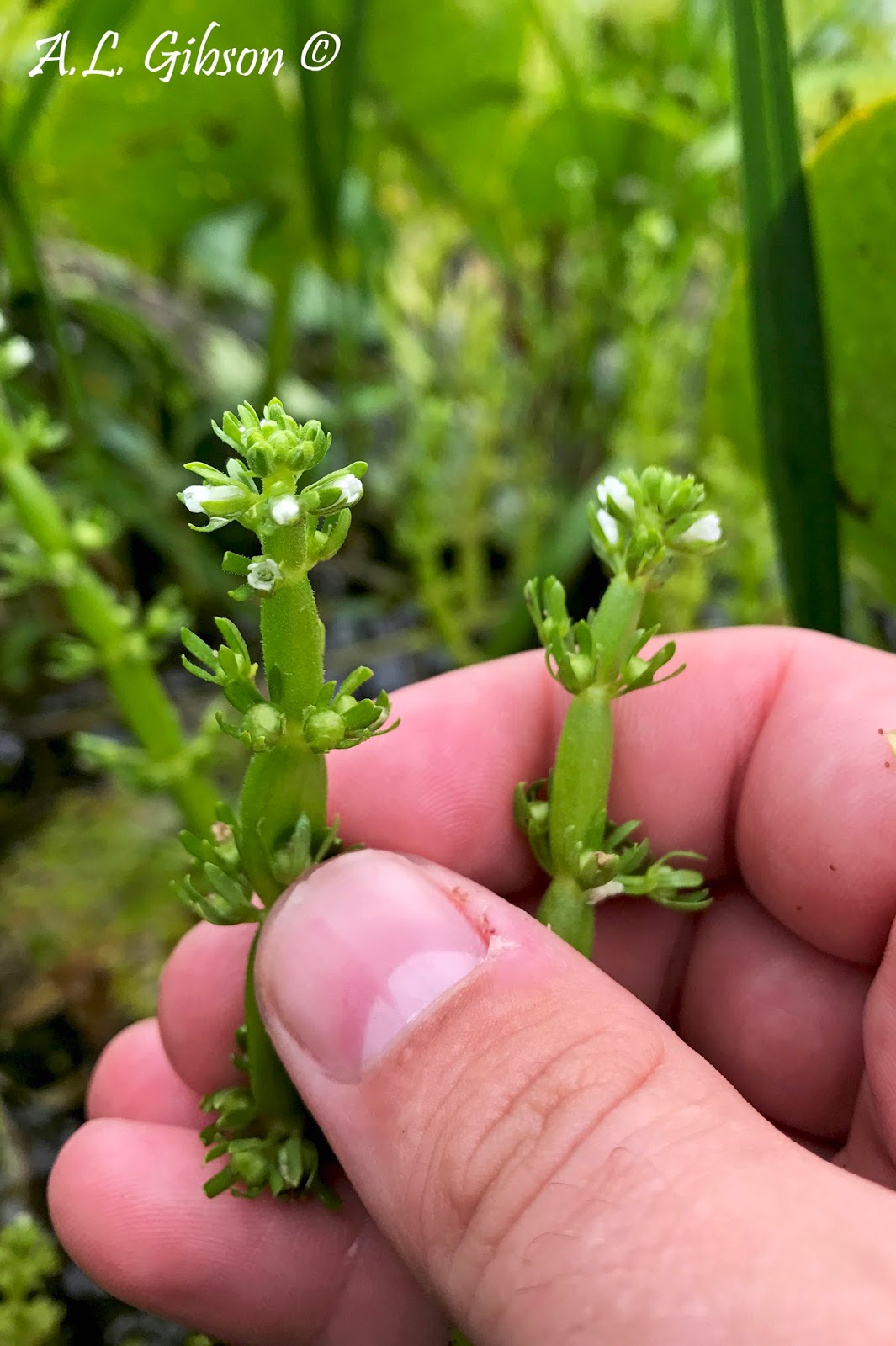
#1 - Featherfoil (Hottonia inflata)

#1 - Featherfoil (Hottonia inflata)


The featherfoil (Hottonia inflata) has been considered extirpated and unseen in Ohio for over 30 years and thought long-lost for our flora. It's a winter annual that is very fickle and finicky about blooming, which makes finding/tracking it even more difficult. Many have looked for it over the decades with zero luck. As the botanical fates would have it, I managed to rediscover a lovely population of it back in late May in a pond in extreme southern Ohio doing its thing and looking great! I can't recall the last time my heart about leaped out of my chest in such a manner as it did: I couldn't believe my eyes! It's such an odd and goofy plant that nothing, and I mean nothing else comes close to looking like. It also happens to be rather rare across its range in the eastern US, too. The feather-like submerged leaves are topped with hollow inflated stems adorned with tiny and inconspicuous white flowers. The cherry on top was the presence of the state-endangered low spearwort (Ranunculus pusillus) occurring at the site as well! Days and discoveries like this are an easy part of why I became a field botanist and do what I love, and love what I do. It's definitely a plant few would find attractive but it's the most beautiful thing I saw in 2017! I plan to do a post dedicated to this plant and discovery in the near future; I meant to back in May when I found it, but we know how that goes.

I hope you've enjoyed this look back on my favorite finds and life plants of 2017. I'll be curious to hear from you, my readers if any of these are on your life lists or plants you've had the pleasure of coming into contact with before. If anything, I hope I've warmed your spirits and computer screens even a little bit as Ohio's winter and wildflower-less season trudges on. Spring is on the horizon, though, and I expect to be staring some skunk cabbage, snow trillium, harbinger-of-spring etc. in the face in the next couple months. Thanks for tuning in and reading!

- ALG -