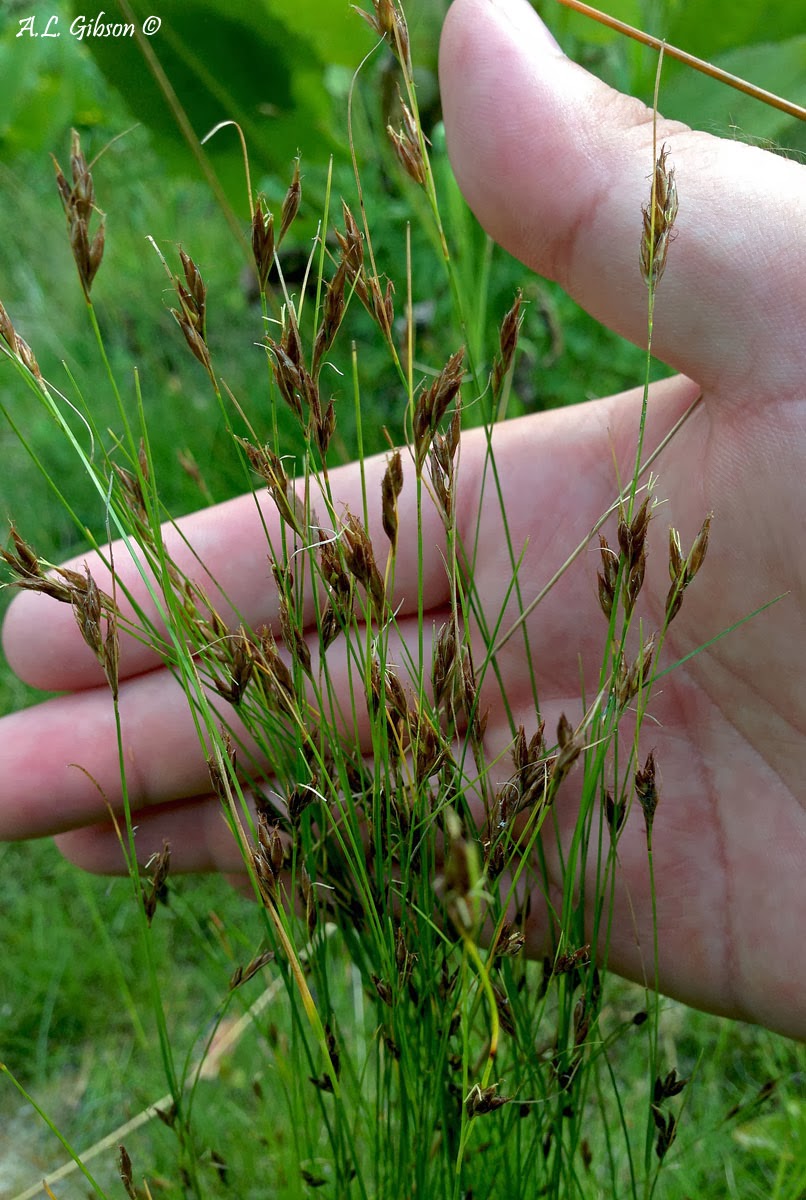
Showing posts with label Sedges. Show all posts

Thursday, March 30, 2017

The Bruce Peninsula Part II: Singing Sands of Dorcas Bay

 *Part I* *Part II* *Part III* *Part IV* *Part V* *Part VI* *Part VII*

Recently, I've had the pleasure of talking to a number of people who've taken the time to compliment this blog. It always means a lot to hear someone say such positive things about the countless plants, places, and topics I've shared on here for nearly six years. But that praise is almost assuredly followed with the regret that I'm barely active on here anymore. Believe me when I say no one understands that more than your blogger. It seems just about every post I've managed to get on here the last couple years is prefaced by more or less the same message of "not enough free time and energy", which is Nature's honest truth but getting a bit old to type. I'll never post on here like I did back in the first few years but it's nice to know this blog is always waiting for new adventures to be shared.

And new adventures will be shared, indeed! Starting with my long overdue series on my botanical whirlwind tour of Ontario's Bruce peninsula back in early June 2015. Devotees may remember my intro piece from last summer that was the planned starting off point but never went any further. Until now! The Buckeye Botanist is back to take you vicariously along to one of eastern North America's most incredible displays of botanical and geological wonder. If you'd like to read the intro, which I encourage you to do, you can click this link here to do so.


Limestone cobble and alvar shorelines of the Singing Sands at Dorcas Bay

My intrepid group of botanists/naturalists and I visited so many wondrous spots on the Bruce that it's difficult to know where to begin. However, when one really thinks about it there's no wrong answer so it might as well be the picturesque shorelines of Dorcas Bay. I'll warn you ahead of time this is a lengthy post but more in pictures than anything. So read it all, peruse the photos only: just have fun and enjoy!


Sprawling shoreline fen complex near the shores of Lake Huron

This parcel of Bruce Peninsula National Park known as the Singing Sands sits near the northern tip of the peninsula on Lake Huron's western shores. It's home to a nice array of both wetland and forested habitat with the likes of alvar, shoreline fen, and mixed coniferous woodland all merging together in a tapestry of diversity.


Scarlet Paintbrush (Castilleja coccinea) on the limestone cobble shorelines

The Singing Sands allegedly gets its moniker from the eerie howl the sand makes as its blown over the limestone cobble shorelines and alvar. It's true the wind is nigh on always whipping about at this site and it is one of the only sandy beaches on the northern end of the Bruce, so I guess we can let our imaginations do the rest. Due to the western shores of the Bruce constantly battling the unbroken fury of Lake Huron its landscape is much more flat and topographically docile than the eastern shores as you'll come to see in this series.


Odd yellow colored form of the scarlet paintbrush (Castilleja coccinea)


One of the more common and delightful denizens of Dorcas Bay's wet, open shorelines is the scarlet paintbrush (Castilleja conncinea). It's certainly hard to miss when aglow in its traditional red garb, but an uncommon lemon yellow color form was even more conspicuous. However, my friends and I did not come to swoon over the paintbrushes but rather a rare, elusive orchid that haunts the adjacent woodlands.


Ram's Head Lady's Slipper (Cypripedium arietinum)

During my initial foray on the Bruce back in 2011, I was just a bit too late to see the ram's head lady's slippers (Cypripedium arietinum) in their prime. It was a bittersweet thing to be so close and yet too late for the plant you came so far to see. So this time around I made sure to adjust our arrival to coincide with their brief peak bloom schedule.


Ram's Head Lady's Slipper (Cypripedium arietinum)


Perfection! I dare say Dorcas Bay could not have put on a nicer show of these miniscule orchid wonders if it tried! Literally hundreds of them peppered the ground in the best spots and brought a literal tear to this orchid nut's eye. Ram's heads are a globally rare species largely restricted to sandy upland conifer woods characterized by hemlock, cedar, and pine with an association of limestone beach cobble. That's some habitat specificity right there and the Singing Sands has it in spades. It's little wonder then the Bruce is one of the continent's last strongholds for this disappearing orchid. Climate change is not doing this northern boreal species any favors.


Ram's Head Lady's Slipper (Cypripedium arietinum)


The spectacular snow white labellum of this lady's slipper is marked with a rich purplish-crimson reticulate venation that jumps out at you from the surrounding emerald vegetation. Its striking color and architecture is equally matched by its diminutive size. None of the other eastern Cypripediums are this small and a large specimen can fit on your thumbnail. It really takes seeing them in person to understand how truly tiny they are!


Large Yellow Lady's Slipper (Cypripedium pubescens)

Speaking of lady's slippers, I'd be remiss if I didn't throw a shout out to the Bruce's 'weed' of an orchid in the large yellow lady's slipper (Cypripedium pubescens). Yes, I did in fact say weed and you'll see and read what I mean in posts to come. As pretty as the pair is in the photo above, I'm much more interested in the colony of familiar looking leaves at their feet...


Federally threatened dwarf lake iris (Iris lacustris)


At first glance any Ohioan might see this majestic little iris and scribble the name dwarf crested iris (Iris cristata) into their notes but remember we're not in Ohio anymore. This iris is much, much more special and another of the Bruce's most rare specialists. The dwarf lake iris (I. lacustris) is so rare that it's listed as federally threatened in both the United States and Canada. It's endemic to the limestone shorelines of northern Lake Huron and Lake Michigan along the Niagara Escarpment and found nowhere else on the planet. Although, in certain spots such as Singing Sands you'd never know it was so globally scarce. The Bruce is one Canada's best strongholds for the dwarf lake iris and easy to spot, especially when in bloom. The photos do nothing for scale but the word dwarf is very accurate in this plant's case as the flowers are only the size of a silver dollar!


Shoreline flora awakening as summer appears on the horizon

Not to be outdone by its aforementioned brethren, the blue flag iris (I. brevicaulis) was beginning to unfurl its purple tepals in the marshy areas between the lake and wooded dunes. Notice the pink flower buds of the tuberous Indian-plantain (Arnoglossum plantagineum) among the iris, too. It's a rarity back in Ohio and even more rare further north in Canada where it's restricted to high-quality fen complexes as well.


That gang exploring the cobble shorelines of Dorcas Bay

When I say that Dorcas Bay may be one of the most magnificent beaches I've yet experienced it's truly through the eyes of a botanist and ecologist. I'm not sure many beach goers would agree after looking out across a landscape of bare rock, muck, and vegetation. They prefer their sand and palm trees with towering concrete behind and I say they can keep it!


Northern Butterwort (Pinguicula vulgaris

Perhaps the neatest plant to call the rocky shorelines of Dorcas Bay home was the peculiar and always exciting northern butterwort (Pinguicula vulgaris). This oddball of an insectivorous plant thrived in a seemingly sterile environment in specialized areas where water seeped out from the bedrock and formed mucky pools along the forest's edge. The butterworts are much more diverse along the coastal plains of the Atlantic and Gulf states with this lone species making due in the north.


Northern Butterwort (Pinguicula vulgaris)


There's certainly no mistaking this plant for anything else with its insidious highlighter yellow leaves. While greasy and slick to our touch, these conspicuous leaves are the things of insect nightmares. Each leaf produces two types of glands: one that secretes a sticky substance for nabbing its prey; and another that secretes a digestive enzyme that helps break down the helpless insects into a more usable form. The butterworts were in full bloom during our visit and are adorned with blue-purple flowers quite reminiscent of a violet in my opinion.


Great Lakes Bulrush Sedge (Carex scirpoidea subsp. convoluta)

If you've been a follower of this blog and my botanical adventures for a while you know without a doubt I'm head-over-heals for sedges. A self-diagnosed sedgehead and I'd have it no other way. The Bruce is well known for its diversity of photogenic plants like ferns and orchids but it's a sedgehead's dream, too! Honestly, I could do a whole post on sedges but I'll let you off the hook with a handful of photos of my favorite species. The one featured above, the Great Lakes bulrush sedge (Carex scirpoidea subsp. convoluta) gets special mention as a globally rare endemic of the Great Lakes limestone shorelines and alvars; it's other more common subspecies spread throughout the western states.


Buxbaum's Sedge (Carex buxbaumii)
Mud Sedge (Carex limosa)


Hair-like Sedge (Carex capillaris)
Pale Sedge (Carex livida)


Sedges come in so many different shapes, colors, sizes, patterns etc. that it makes them hard to not love and appreciate when you realize just how wonderful they are. The Bruce is home to over 150 different species from the sedge family (Cyperaceae) and during my group's week we saw nigh on 30 different taxa.


A cool, foggy mist blowing off Lake Huron

Singing Sands attempted to somewhat live up to its name during our time there when Lake Huron blew in a bank of cool fog. It was awesome to watch it race across the waters, up onto the beach and envelope us all in a very refreshing wave of mist. It went as quickly as it came and I have no idea what caused it to develop but it certainly made for a unique experience that I won't forget anytime soon.


Great Lakes Sand Cherry (Prunus pumila var. pumila)

Scattered about Dorcas Bay's rocky shorelines was scads of the regional endemic Great Lakes sand cherry (Prunus pumila var. pumila) in picture-perfect bloom. This straggly shrub never attains much size and is happy to grow in tangles about its prime beachfront property. Its confined to the beaches and dunes of the northern Great Lakes with its narrow leaves and glabrous twigs excellent ID characters. Unfortunately, this species has long been extirpated from Ohio's extremely limited lake shore habitats, so I always take immense pleasure in seeing it while up north.


Immense expanse of shoreline fen at Dorcas Bay's Singing Sands

I'll wrap up this marathon of a post with another of Singing Sands signature rare habitats it protects in the immense expanses of shoreline fen meadow. Unlike the small, isolated fens that pocket west-central and northeast Ohio, the Bruce's can stretch for as far as the eye can see and contain hundreds upon hundreds of acres of graminoid-dominated goodness. Their species assemblages and associations are quite similar but their hydrology differs in adjacent Lake Huron's water levels playing a key role.


Northern Pitcher Plant (Sarracenia purpurea var. purpurea)
Slender-leaved Sundew (Drosera linearis)


One of the first things you'll notice when exploring these shoreline fen complexes is the overwhelming abundance of insectivorous plants. This habitat is naturally low in nutrients and plants have evolved to combat that by attaining these much-needed items by outside means. Literally thousands upon thousands of northern pitcher plants (Sarracenia purpurea var. purpurea) dot the fens, which happened to be just a week or so away from flowering during our visit. At their bases in the saturated muck is thousands more of the alien-like slender-leaved sundew (Drosera linearis) waiting for a passing insect to meet its sticky demise.


Green-keeled Cotton Sedge (Eriophorum viridicarinatum)

I can't help but go back to the world of sedges in order to share one of the fen's most iconic and beautiful of scenes. Hundreds of green-keeled cotton sedge (Eriophorum viridicarinatum) plants waving their namesake cotton-like perianth bristles in the cool breeze never fails to put me at peace and in a mood of tranquility. A sapphire blue sky above can only make it better, eh?


Bog Rosemary (Andromeda polifolia)
Labrador Tea (Rhododendron groenlandicum)


Of all the things I love about the northern woods its plethora of woody wetland shrubs may take the cake. Dozens of species occur throughout the region's diversity of habitat and the two featured above are arguably the best, at least in my opinion. Both the bog rosemary (Andromeda polifolia) and labrador tea (Rhododendron groenlandicum) are extirpated from Ohio and more commonly found in acidic boggy habitats, but select areas of fen meadow can have peat accumulations that turn the pH low enough for these gorgeous Ericaceous shrubs to occur and persist. Bliss!


With that I do believe I'll give my keyboard a rest and continue my series on the ever-fascinating Bruce peninsula at a later time. I certainly have the desire to get to it much sooner than later but I've learned it's best to not make any hard promises. I hope you've enjoyed this look at the Singing Sands and its incredible wealth of plant life and look forward to more. Please leave your thoughts and comments below and I thank you for your time!


- ALG -

Monday, November 7, 2016

Top Ten Life Plants of 2016


It's hard to believe yet another growing season has come and gone. Spring and summer flew by in a blur your narrator can hardly comprehend with autumn currently in its own hurry as well. I really don't know where the time goes and find it going by at an ever increasing rate. With the end of the growing season comes the annual updating of my botanical life list. As time goes on and I become more and more acquainted with my local and regional flora, the frequencies of making new floral friends decreases. This makes each additional life species marked off the list feel perhaps just a bit more gratifying than the last. 2016 had its fair share of exciting and unbelievable discoveries as the forthcoming ten different plants are sure to show. This is a personal list of sorts and one of the more fun pieces of reminiscing I get to do each year. My activity on here has really waned the last two years as life gets more busy and I find less free time and energy to put into the blog but I definitely try to make time for this specific topic.

This past year I had the opportunity to do some traveling across the nation and made acquaintances with a striking number of new plants. Week long trips out to the Rocky Mountains of Colorado and Adirondacks of New York were the biggies, along with some weekend trips out of state. While I made plenty of new botanical friends here in Ohio, none managed to make the top ten list. There were just too many to choose from from out-of-state travel. All ten plants were species I'd never had the pleasure of seeing in the flesh before; many only dreamily through a computer monitor or from the pages of my extensive botanical library. Some I specifically set out to see, others I came across by complete chance. Each one aroused emotions of excitement and disbelief, often erasing years of anxious desire. 

All that being said, let's begin the countdown of my favorite life plants from an unforgettable spring, summer and fall of botanizing throughout North America...

Alpine Clover (Trifolium dasyphyllum)

Starting off the countdown at number ten is the aptly named alpine clover (Trifolium dasyphyllum). This attractive legume was one of a handful of native clovers seen during my partner Kara and I's vacation out to the Rocky Mountain National Park region of Colorado this past June and July. The alpine meadows at 12,000'+ were out of this world with dozens of different wildflowers in spectacular bloom but these strawberry and cream looking wonders were among my favorites. I'm already beyond behind sharing this trip and those before/after it in blog form but fingers crossed I get to them one of these days.


Creeping Snowberry (Gaultheria hispidula)

Life plant number nine was easily one of the most exciting of all the plant sightings while immersed in the boggy peatlands of the Adirondacks, as well as one of the daintiest. The evergreen vining stems of the creeping snowberry (Gaultheria hispidula) is a plant long gone from Ohio's landscape but thankfully common in the Northeast and northern Great Lakes region. I'll admit I've come across this species before in my travels but only as an undistinguished vegetative plant, so seeing it adorned with its adorable snow white fruit was like truly seeing it for the first time. The white fruits are actually edible and have a wintergreen taste to them, essentially making it Nature's tic-tac like breath mints. The shaded mossy hummocks at the margins of a black spruce and tamarack bog were covered in a dense tangle of this plant and a perfect opportunity to soak in its charming demeanor.


From L to R: Michaux's Sedge (Carex michauxiana), Toothed Flatsedge (Cyperus dentatus), Bog Sedge (Carex. magellanica)

As a self-admitted and diagnosed sedge-head, I don't think I'd be living up to the title if I didn't share some of my favorite sedge lifers. So number eight on this countdown of 2016's best life plants are three species from my time in the plethora of wetlands in the Adirondacks. I came across nearly 50 species of Cyperaceae while up there and Michaux's sedge (Carex michauxiana), toothed flatsedge (Cyperus dentatus), and bog sedge (Carex magellanica) were my favorites. None of the three are known to occur in Ohio and all are more or less restricted to higher quality fens/shorelines/bogs in the northern latitudes of the continent. The bog sedge (on the far right in the photo) was an especially invigorating find as it's been on my 'most wanted sedges' list for many years and evaded me time and time again. I'll never forget exploring a small pocket of open bog meadow and finding its sphagnum hummocks covered with them, their chocolate brown ripened perigynia shattering at the slightest touch.


Wild Bleeding Hearts (Dicentra eximia)

Number seven on this countdown has the distinction of being the only plant on this list not from Colorado or New York. Instead, the gorgeous wild bleeding hearts (Dicentra eximia) is from Kara and I's weekend backpacking trip this past spring to the stunning landscape of West Virginia's Dolly Sods region. Many may recognize this plant as something you see in the garden and/or landscape setting but it's actually a species indigenous to the Appalachians. It's rather uncommon throughout its limited range and most prevalent in the Virginias. I'd be remiss if I didn't mention the important detail that it was my partner Kara who actually found this wildflower and not me! She called me over to see a "really neat pink flower we hadn't seen yet" while exploring Bear Rock's heath barrens, which made me ponder what it could be as this wasn't on my radar for this trip. It was nestled in a mossy crevice between boulders and an impressive spot by her. I think she's developing quite the sharp eye for plants!


Rock Spike-moss (Selaginella rupestris)


The criteria for how a plant species makes it on my annual list of best life plants goes much deeper than just physical beauty. If that was the lone requirement I have my doubts that plant number six would have made the final cut. Rock spike-moss (Selaginella rupestris) is another one of the those oddities that I've had the botanical hots for for many years. Despite what its name may suggest, this plant is not really a moss but rather a fern ally related to the quillworts (Isoetes) and lycopods (Lycopodiopsida). It's an ancient and impressive little species with its sporangia (spore-bearing structure) tucked singly at the base of its fertile leaves, or sporophylls. One thing rock spike-moss does have in common with true bryophytes is being poikilohydric, meaning it come withstand severe bouts with drought/water loss and appear dead as a door nail, only to bounce right back to green, lush life after a rain. This primitive little spore producer is widespread throughout North America but unfortunately long extirpated from Ohio and a plant I've searched out for years in its historic haunts. The patch photographed here was found clinging to a rocky bluff overlooking the Hudson River while out in upstate New York.


View from Devil's Head Lookout in Colorado's Pike National Forest
Northern Spleenwort (Asplenium septentrionale)


Coming in at number five on this countdown is a plant I took more of a risk to see than I really care to admit. While out in Colorado, Kara and I did the well-known Devil's Head Lookout hike in Pike National Forest. It's a three mile jaunt gaining over 1,000 feet in elevation to a mountain top's fire tower with unbelievable views. While at the top of the narrow ridge, I noticed some tufts of green emerging from a crevice that I suspected could be the rare northern spleenwort (Asplenium septentrionale), a fern I desperately hoped to come across while out west. The fern looks very frustratingly similar to a simple tuft of grass and requires a close look to see its 'leaves' contain the characteristic small forks at their ends. My problem was the crevice was too far away to see clearly or photograph, so I slid out onto the ledge and scooted as close to the edge as I could with a several hundred foot fall to my assured death just a few feet and quick slip in front of me. I thoroughly scared Kara half to death and truthfully myself as well. I'd been pretty upset had a worthless clump of grass tricked me into taking such a risk. My palms are a bit sweaty just thinking back on my stupidity BUT it was indeed the northern fern and worth the risk to me! It was the only time I ever saw any and walked away with my life and a good story. I've already accepted that botany could very well end up being the end of me...


Water Marigold (Bidens beckii)


Shifting back to the the Adirondacks of New York finds us at life plant number four on our countdown. My early August visit to New York produced many life plants but few meant more than finally coming face to face with the golden blossoms of water marigold (Bidens beckii). Like some of the other plants listed above, this unique wildflower has been extirpated from Ohio's borders for over a century and was a delightful sight in the calm shallows of a bay in the Hudson River during a paddle with friends. It's a hard plant to miss when flowering with its single terminal flower suddenly emerging from the water's surface. The simple, stalkless emergent leaves are a stark contrast to the water marigold's finely filiform, fan-like submerged leaves that run the length of the underwater stem, sometimes nearly ten feet to the substrate. Looking at the whole thing makes it seem like two completely different plants merged together in an experiment gone awry. It also reminds me of an iceberg with so little of the plant visible and the bulk of it unseen below. Water marigold was once widespread and common in the Northeast and Great Lakes region but is becoming increasingly more rare throughout its range due to the negative impacts on its aquatic habitats.


Gunnison's Mariposa Lily (Calochortus gunnisonii)
Gunnison's Mariposa Lily (Calochortus gunnsonii)


Before heading out to Colorado this past summer, I spent many weeks leading up to our trip daydreaming and researching what members of its diverse flora I wanted to see. I came up with far more than I ever reasonably imagined I'd find but the mariposa lilies (Calochortus) were an instant must-meet. As luck would have it I'm able to happily list life plant number three on this countdown as the Gunnison's mariposa lily (C. gunnsonii). During the long, remote drive to the Devil's Head Lookout trail head, I spotted a tall flash of white in my peripheral vision that caused me to slam on the brakes and put the Subaru into reverse. Good thing I did as that curiosity turned out to be the only mariposa lily I'd see the entire trip. It was in perfect condition and speckled with water droplets from the ever-present rainstorms we dodged most of the week. I've marveled at this genus' beauty for years and to finally see one's floral perfection in person was pure botanical bliss!


Rocky Mountain Bristlecone Pine (Pinus aristata)


Those that know me personally or have followed this blog from the beginning know that trees were my first botanical love and remain a passionate favorite to this day. So it shouldn't come as much of a surprise that number two would end up being one of, if not the coolest tree species this tree hugger has yet seen in the Rocky Mountain bristlecone pine (Pinus aristata). Their ancient, gnarled form made each individual tree a work of art and unlike anything I'd seen before. Some trees from this grove in the Mount Goliath Natural Area at about 11,500' have been dated to over 1,600 years old and definitely looked the part! It's hard to fathom thriving, let alone surviving for over a millennium at the tree line in the cold, harsh and windswept climate of the subalpine that few other trees can tolerate. My time among these primal trees was an emotional experience and I came away with a newfound respect and fascination for my beloved woody plants. Even Kara completely understood and grasped the impressive nature and importance of these trees and loved every second among them as well. I'll make a genuine tree hugger of her yet! It's worth mentioning that another species of bristlecone pine (P. longaeva) found further to the west in California, Nevada, and Utah is known as the oldest living individual organism on Earth with some specimens confirmed to be over 5,000 years old! Incredible...


Clustered Lady's Slipper Orchid (Cypripedium fasciculatum)

If you've been following along on this countdown and been wondering, or perhaps even worried about when the first orchid would make its appearance fear no more! It took awhile but I naturally saved the best for last and present to you the number one life plant from 2016. The clustered lady's slipper orchid (Cypripedium fasciculatum) was easily my most wanted botanical item during Kara and I's week long trek out to Colorado. I didn't have much in the way of solid leads or ideas on where to look for this elusive orchid other than its affinity for cool, shaded fir/spruce forests around 9,000-11,000' in elevation. I figured my chances were slim-to-none and wasn't holding my breath on coming across any, especially in prime blooming condition. Little did I know how lucky I would get!


Clustered Lady's Slipper Orchid (Cypripedium fasciculatum)


Everyone know's my obsession and addiction with wild orchids and after seeing so much of the east's wonderful diversity, I was really excited at my chance to gain a few new life species while out west at a favorable time of the year. I ended up seeing a half dozen or so species of orchid but none had the same inebriating effect as the clustered lady's slippers. Kara and I were on a long hike in the depths of Rocky Mountain National Park when I caught a glimpse of them blooming in the sparsely vegetated spruce needle duff along the trail and could barely contain my shock or keep my heart in my chest. I ended up finding a lot of them spread throughout the area in a range of colors, from deep maroon to a more yellowish orange-green. The flowers were smaller than I'd imagined and distinctly clustered as the name would suggest. One might argue they aren't all that aesthetically pleasing, especially compared to other members of its genus but they were ineffably gorgeous to me. My time with them was too short and the drizzly conditions didn't make photographing them easy but in the end it didn't really matter to a beggar like me. Just reminiscing on such an incredible experience has me on cloud nine all over again. I can't wait to get back out to the mountain west and hunt down the rest of the continent's lady's slipper orchids.

I hope you've enjoyed this look back on my favorite finds and life plants of 2016. I'll be curious to hear from you, my readers if any of these are on your life lists or plants you've had the honor of coming into contact with before. If anything I hope I've warmed your spirits even a wee bit as the reality of another wildflower season come and gone sinks in. If 2017 is anything like my 2016, it will be full of fantastic finds, exciting discoveries and more memories made soaking in the natural world's beauty and diversity. I certainly hope to find some time this winter to look back on my trips out to Colorado and New York in greater detail. I'd certainly like to and know the few dedicated readers still hanging around for new posts would too.

- ALG -


Tuesday, November 26, 2013

Showcase on the Sedges (Cyperaceae)

Sedges.  The mere mention of this monocotyledonous group can make even the most enthusiastic of plant lovers furrow their brow.  That comes as no surprise as the complexity and excruciatingly similar characteristics of the family is well known and subsequently shunned by some.  They typically aren't for botanical greenhorns but can quickly become a fevered obsession to some.  Don't fear though!  This post is geared towards the artistic and aesthetic aspect of the family and its respective genera/species with some basic information.  I don't want to overdue it and drown my readers in a deep treatment full of botanical jargon and drool-inducing paragraphs; even if it sounds like fun to me!  I'm one of the aforementioned folks with the hots for this family.

Carex sartwellii among the Virginia irises in a west-central Ohio fen meadow

The Cyperaceae family is arguably the largest (grasses in the Poaceae could have more, I've never counted and compared) in Ohio with 250+ species in 15-16 different genera.  Sedges come in all shapes and sizes.  Some are so minute you need a hand lens to accurately inspect the plant, while others can be taller than you and/or occur in large, sprawling colonies.  Despite many species appearing very similar, they all display a unique and sometimes fascinating arrangement, look, and/or feel to them.  Many species are downright beautiful and architectural works of wonder as you'll soon see.  Fair warning: most sedges don't have common names and only go by their Latin botanical names.  If all else fails, just glance at the photos and admire these all-too-frequently overlooked plants!

Carex communis flowering in the early spring

The largest and most diverse of the Cyperaceae's genera are the true sedges from the Carex genus.  Ohio is home to over 160 different species and account for a nice chunk of our botanical biodiversity.  The photograph above shows the delicate pollen-laden staminate (male) flowers and the clear, thread-like pistillate (female) flowers on the flowering culms of Carex communis in early spring.

Display of associate sedge species from a calcareous fen meadow

All Carex have three-ranked (triangular) leaves/culms and their achenes (seeds) each individually encased in a papery sack called a perigynium (perigynia plural).  the perigynia make up the spikelet (fruit) and are hands down the most attention-grabbing part of a sedge.  Above is a lineup of some Carex species typically found in west-central Ohio's calcareous fen meadows.  From left to right: C. stricta, C. buxbaumii, C. viridula, C. sterilis, C. flava, C. leptalea, C. suberecta, and C. hystericina.

Next are a handful of different Carex species I find visually appealing and worth an extra look at.  Admittedly, they also happen to be some of the species I've managed to remember to photograph.  With so many wildflowers and trees around, it's sometimes hard to focus your lens on such small botanical bounties.

Carex grayi
Carex lurida


From R to L: Carex frankii, C. crus-corvi, C. lupulina, C. lupuliformis, C. grayi, C. comosa, and C. crinita


Carex hyalinolepis
Carex utriculata


Carex buxbaumii

Of all of Ohio's indigenous sedges, this one may be my favorite.  Buxbaum's sedge (C. buxbaumii) has perigynia of a spectacularly distinct green color that is contrasted brilliantly by its dark pistillate scales.  This uncommon species is most frequently found in Ohio's calcareous fen meadows but also occurs in marshes, wet flatwoods, and other wet, open habitats.

Carex squarrosa
Carex aurea


An interesting note about Carex aurea (pictured above right), is the fact its achenes are edible and have somewhat of a nutty taste to them.  I gave it a try after snapping the picture above with my iPhone and wasn't displeased at their taste.  Not too bad!

Comparison between C. comosa on L and C. pseduocyperus on R

An example of two similar species can be seen above with C. comosa on the left and the very rare, state-endangered C. pseudocyperus on the right.  Careful examination and measurement of the perigynia and their beaks is essential in this particular case!

Sea of Carex intumescens growing in the deep shade of a wet, acidic flatwoods in southwestern Ohio.

Now it's time to move away from the diverse Carex genus and explore a number of other genera in the Cyperaceae family and some of their representative species.

Browning clump of woolgrass (Scirpus cyperinus) growing alongside a pond.

The Scirpus (bulrushes) genus is represented by eight species in Ohio, with the photographed woolgrass (Scirpus cyperinus) being one of the most frequent species.  Bulrushes are vital food sources for waterfowl and other aquatic critters.  The bulrushes tend to be the largest/tallest of the Cyperaceae members as well.

Eleocharis obtusa 

Eleocharis (spike rushes) is a diverse and notoriously difficult genus that requires careful study of their tiny achenes and other inconspicuous characteristics to identify them down to species level.  Spike rushes have small terminal spikelets and culms with extremely reduced leaves (blades often absent).  There are 16 taxa native to Ohio with many being rather rare, or at least overlooked.

Rhynchospora capillacea
Rhynchospora capitellata


Rhynchospora (beak rushes) are named for the tiny "beak" or tubercle that caps each achene in this genus.  Their spikelets occur terminally and are arranged in glomerules, or compacted clusters.  Here in Ohio we only have a handful of species (including the two photographed above) but further to the south/east this genus is represented by dozens of species.

Eriophorum viridicarinatum

Eriophorum (cotton grass) is one of the most immediately-recognizable and distinguishable Cyperaceae genera for its woolly perianth bristles that are quick to catch the eye.  Unlike the aforementioned Rhynchospora genus whose range is primarily in the southeast; this genus is predominately found in the boreal north's fens and bogs.  Ohio is home to only three species and all three are quite rare in their limited distribution.

Cladium mariscoides

Cladium (twig rush) is a small genus of only three North American species and only one member in Ohio.  Our sole species, C. mariscoides occurs in calcareous fen meadows, marly mud flats, and marshy shorelines.  A relative of our twig rush, C. mariscus in the south is known as sawgrass for its hard, serrated edges that can easily slice open mammalian skin.

Schoenoplectus purshianus
Schoenoplectus saximontanus


Schoenoplectus (naked-stemmed bulrushes) is a relatively new genus split out from Scirpus and still goes by the common name of bulrush.  This genus has species that can be have either triangular or round stems in cross-section; which can cause for some confusion.  However, its small, clustered spikelets accompanied with an erect, non-leafy proximal bract (looks like a continuation of the stem) can help them stand out.

Scleria triglomerata

Scleria (nutrushes) might be my favorite genus out of all the Cyperaceae.  There are only four species to be found in Ohio but their very artistic achenes definitely set them apart.  The achenes turn bleach white when mature and have a unique pattern and/or combination of characters that help identify them to the species level.  I definitely plan to delve into our state's four taxa in their own dedicated post in the near future.

Dulichium arundinaceum

Dulichium (three-way sedge) is a monotypic genus, meaning only one species (D. arundinaceum) represents the entire genus.  This unique plant does an excellent job of displaying the three-ranked leaves trait when looking straight down from above.  The thin, needle-like structures are this species' achene-bearing spikelets.  It occurs sporadically throughout the state in wet-moist, open soiled situations.

Lipocarpha drummondii

Lipocarpha (dwarf bulrush, halfchaff sedge) is one of the most dainty and unique of the Cyperaceae genera  in Ohio.  Only two species occur in our state and both are extremely rare and only occur in a few places. The plants are small, densely tufted annuals with very thin culms that bear equally small spikelets near the apex. Keep an eye out for this genus in northwest Ohio's flat, sparsely-vegetated sand plains and swales.

Trichophorum alpinus

Trichophorum (club rush) is a weird but charming genus that physically looks very similar to the spike rushes (Eleocharis) with a single, small, and terminal spikelet; however Trichophorum spp. culms have reduced, but noticeable leaf blades.  This particular species, T. alpinum pictured does not occur in Ohio but has the added bonus of perianth bristles reminiscent of the cotton grasses (Eriophorum); which this species is sometimes placed in.  In Ohio, we only have a single species found in upland, dry oak forests called T. planifolium.

the native annual Kyllinga pumila (L) sitting next to the invasive, non-native and rhizomatous K. gracillima

Kyllinga (greenhead-sedge, spike sedge) is last but certainly not least.  This often overlooked and diminutive native sedge is quite charming and handsome in its own right.  Our native species, K. pumila is an annual with a fibrous root system (seen on left above) and can easily be told apart from the newly-invading, non-native Asian species, K. gracillima, which is a perennial with a rhizomatous habitat.

There are a handful of genera I currently do not have photographs of (Bolboscheonus, Bulbostylis, Cyperus, and Fimbristylis) that I hope to add to this post sometime in the future.  If anything, I hope you've discovered that between the diversity and difficulty of this family, there is an awful lot of beauty.  You only have to look a little harder, sometimes with the aid of a hand lens to see it!