I love botany. I don't think you need to know me on a personal level to arrive at that conclusion. There's just something about it that really gets the heart pumping and adrenaline flowing. One never knows what lies just around the bend no matter how many times you've walked that trail before. That's what keeps the passion so fresh; the humility of the search is only bested by the excitement of discovery. Earlier this week while botanizing west-central Ohio's remnant tall-grass prairies and fen complexes I was lucky enough to recharge my botanical chi with a few thrilling discoveries of my own...
The day started by picking up good friend and fellow blogger Michael Whittemore of
Flora and Fauna of Appalchia fame for a fun-filled day of hiking and exploring the aforementioned ecosystems my home area of Ohio is known for. Mike had yet to experience the fascinating and unique plant communities fens have to offer so I was certainly excited to introduce him to arguably my favorite Ohio ecosystem. First up, though was a quick swim through the sea of tall, warm-season grasses at Pearl King oak savannah, one of Ohio's largest and most intact prairie remnants of the once formidable Darby Plains.
*Remember to click on the photographs to see them in a larger, more detailed resolution!*
 |
| Ancient Oaks of Pearl King |
 |
| An open area with a surprise! |
I apologize for the first few pictures being rather washed out but not much you can do when trying to photograph in bright, sunny conditions. Just have to deal with what Mother Nature gives you! While Pearl King is only 14 acres in size it more than makes up for its small proportions with a rich and deep look into Ohio's natural history. Big Bluestem (
Andropogon gerardii), Indian-grass (
Sorghastrum nutans), Little Bluestem (
Schizachyrium scoparium), Prairie Cordgrass (
Spartinia pectinata) and the rare, state-threatened Prairie Dropseed (
Sporobolus heterolepis) abound in the fertile, unplowed virgin terra firma along with gargantuan and ancient Bur, White and Post oaks. Look for a more detailed and intimate post going into the history and flora of this preserve in the near future. Today I want to focus on one little plant hiding amongst the prairie grasses.
 |
| Spiranthes lacera var. gracilis |
 |
| Spiranthes lacera var. gracilis |
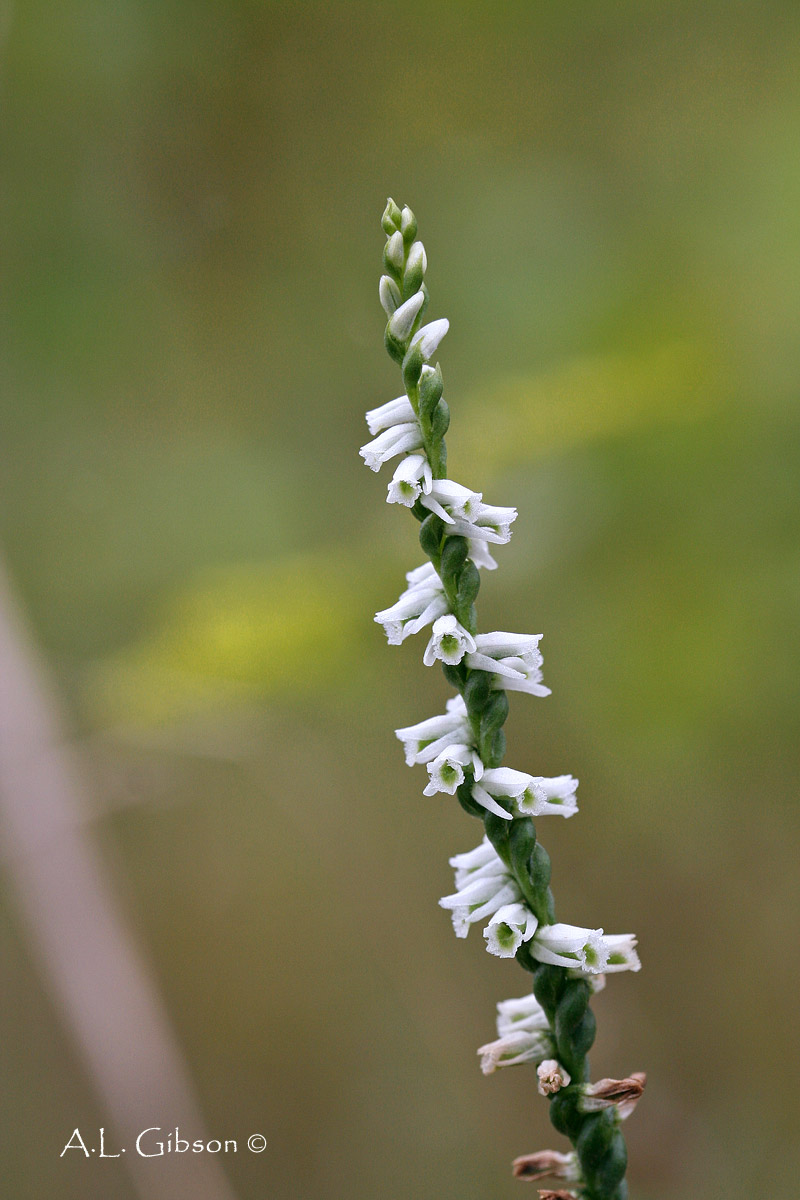
As we made our way through the grasses at Pearl King I came across a small, open patch of ground with a curious little stalk of white, spiraled flowers growing near a stunted oak sapling. Kneeling down for a closer look I immediately recognized it as Slender Lady's Tresses (
Spiranthes lacera var. gracilis) by the green coloration on the lip and mouth of the inflorescence. I quickly called Mike over to take a look, as I knew he was a big fan of the
Spiranthes orchids. I was excited at the chance to show him the Nodding Lady's Tresses (
S. cernua) at Gallagher fen but had little hope of finding any other
Spiranthes during our hikes. I've seen slender lady's tresses plenty of times and have always thought of it as one of Ohio's most common species of
Spiranthes and didn't really think much of the sighting at the time but more on that later...
 |
| Gallagher Fen in Clark County |
 |
| A tiny curiosity caught my eye... |
After leaving Pearl King behind we set our sights on one of the most interesting and down right awesome natural areas in the state, Gallagher Fen. This particular fen is unique among others by combining not only the normal features of a fen environment but the added pleasure of a naturally-occurring perched hill prairie above the fen. This upland habitat adds another floristic component to the equation with native prairie species blooming and watching guard over the delicate aquatic calcifiles below. After spending a couple hours exploring the fen and surrounding prairie, Mike and I started to make our way back through the mature Oak/Hickory woods bordering the preserve when a tiny little plant caught my attention.
 |
| Spiranthes ovalis |
 |
| Spiranthes ovalis |
As luck would have it I happened to be face to face with yet another unexpected
Spiranthes, the Lesser Lady's Tresses (
Spiranthes ovalis var. erostellata). Easily the smallest and least attractive of the lady's tresses, I was a bit taken aback to have found this plant in Gallagher fen, let alone to have noticed it as we walked down the path. I had previously seen this dainty little orchid in several spots in Adams county last fall but never outside the confines of southern Ohio. I quickly pulled my trusty iPhone out to check the current known distribution of the species as I wasn't aware of
S. ovalis being known from Clark county. After a quick check of the out-dated USDA distribution maps as well as the more trusted and current BONAP ranges I quickly noticed neither had any records of this for Clark county. Hmm? I'm pretty hesitant to ever get my hopes up when the maps don't confirm my findings but it did leave me a bit more curious about the situation.
 |
| Size comparison against camera lens |
 |
| Lesser Lady's Tresses in full bloom |
Since I had all the ranges of the North American
Spiranthes at my finger tips I decided to take the few seconds needed to check on the Ohio distribution of the previously found
S. lacera var. gracilis just to be thorough. My brow furrowed as I noticed no record for the species being collected in Madison county before. Could I possibly have stumbled across new county records for these two miniscule orchids? I needed a better source than USDA and BONAP to soothe my wandering mind so I quickly shot an email to Rick Gardner, one of Ohio's premiere botanists. If anyone could point me in the right direction I figured he could. The following morning Rick responded by saying he would check the records later in the week but suggested I get in touch with director of the herbarium at the Ohio State University, Dr. John Freudenstein. Rick said Dr. Freudenstein had been working on the orchids of Ohio and had the most up-to-date county distribution maps for our state.
A few hours later my iPhone chimed the tone signaling a new email. I quickly became excited to see a new message from Dr. Freudenstein and anxiously read his response. After taking a look at the maps and the collection records from not only Ohio State's herbarium but Miami University and Ohio University as well he concluded it was safe to say both the
Spiranthes lacera var. gracilis from Pearl King in Madison county and
Spiranthes ovalis var. erostellata from Gallagher fen in Clark county were both new county records! Pretty cool stuff if you ask me! It's not every day you find a species of plant never previously known from the county before, but to find two on the same day and to both be from my beloved
Orchidaceae family really puts a smile on my face. Just goes to show you there is still plenty of things to discover out there in the botanical world and nothing is completely known. Like I said before there is just something about the thrill of discovery that just can't be beat!
If you want a more in-depth look at these two species of orchid you can take a look at a post I did last fall on several species of
Spiranthes to be found
HERE. I hope you vicariously enjoyed these discoveries and look forward to more detailed posts about the days finds and experiences at Pearl King and Gallagher Fen. Thanks for tuning it!