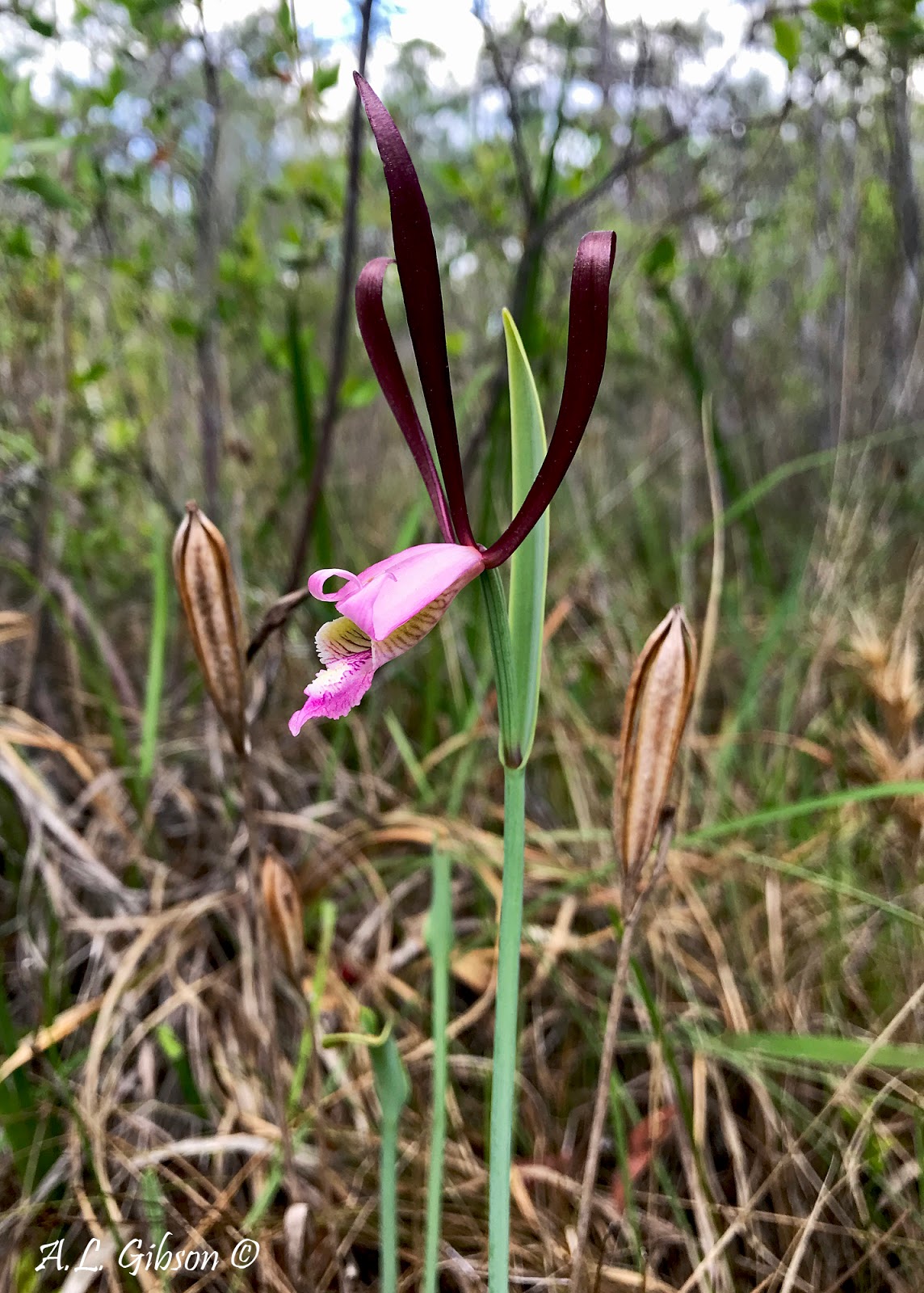
Showing posts with label Orchids. Show all posts

Friday, February 22, 2019

Top Ten Life Plants of 2018

Hello? Tap, tap, tap...this thing on? Whew, it's been a minute since I've been on here. Just over a year, actually. Definitely the longest hiatus since this blog's inception back in the fall of 2010. Speaking of which, I can't believe its been eight years since I sat down and wrote my first post. It seems so much shorter and longer ago at the same time. Weird how time works isn't it?

A quick update on things before we dive into the subject matter at hand. First off, I got married to my long time partner, Kara early last year! Definitely the highlight of 2018 for me! We also moved to Columbus this past summer after nearly a decade of living down in the rolling hills of southeast Ohio. I miss the Athens area and all my favorite haunts but it's nice to be centralized and enjoying my own office in the ODNR headquarters in town. Happy to report I'm still working as a field botanist and ecologist for the Ohio Division of Natural Areas & Preserves and loving most every minute of it. That pretty much catches you, my ever-patient and faithful readers (I mean, how many of you are actually left these days anyways haha?) up on the major happenings in the Buckeye Botanist's life.

I'd also like to take this time to dedicate this post to Keith Board, a good friend of mine and spirited fan of my writing and photography. Keith passed away last month after an extended illness. He was only 58. Keith was a sensational and accomplished botanist and naturalist in the northern Indiana and Chicago region and he will be greatly missed by countless individuals who's lives he touched. He was the most positive and encouraging person you could hope to know. Rest in peace, Keith.

Back to business. It's that time again to sit down and write up what's come to be a yearly favorite of mine and a post I'll always make time for: this past year's top ten life plants! It's a wonderful way to reminisce on a growing season's worth of discovery and adventure and 2018 had plenty.

2018 was an eventful year with exciting happenings both in my home state of Ohio and outside her borders. My aforementioned work kept me busier than ever with some noteworthy discoveries that I certainly hope to share on here one day. I also made treks down to the Florida panhandle back in early May, as well as a once-in-a-lifetime loop trip around the entirety of Lake Superior in July! I'd love to document both excursions, especially the Superior trip in blog form one day, too. Both adventures provided countless unforgettable botanical moments and finds. Honestly, all ten species you'll see below come from those two forays. I made acquaintances with my fair share of new Ohio flora this year but none managed to make the list this time around. All this made for the most difficult top ten list I've had to put together in the 4-5 years I've been doing this post.

All that being said let's begin the countdown of my favorite life plants from a memorable spring, summer, and fall of botanizing throughout eastern North America...


#10  "Red" Yellow Pitcher Plant (Sarracenia flava var. rubricorpora)


Longleaf Pine savanna community near Sumatra, Florida

2018 life plant #10 takes us down to Apalachicola National Forest on the Florida panhandle. My wife and I took a belated honeymoon down to the beach in early May for a week of lazy cocktail drinking and seafood eating. However, she knows who she married and I had to get out into the wild from time to time; she was even a good enough sport to come with one day! In one particular longleaf pine savanna community was an extra diverse display of flora and home to plant #10...

Sarracenia flava var. rubricorpora

I love any and all of North America's native pitcher plants but there's something about this very rare and beautiful red form of the yellow pitcher plant (Sarracenia flava var. rubricorpora) that really speaks to me. Legend has it this unique color morph only occurs in the wild on the Florida panhandle. It's a highly sought-after variety in the carnivorous plant trade, which makes seeing it actually out in the wild an extra special thing. I'd had the luck of seeing typical yellow pitcher plants on several occasions, including countless times on this trip but these blood red beauties stole the show!


#9  Cahaba Paintbrush (Castilleja kraliana) &
Alabama Pinkroot (Spigelia alabamensis)


Ketona Dolostone glades of the Bibb County Glades in central Alabama

2018 life plant(s) #9 take us to a quick stop in central Alabama to see a site I've drooled over for many years. The famed Bibb County Glades deserve and will get their own dedicated post one day but for now this very brief introduction and appetizer will have to do. This fascinating habitat sits on a unique form of dolostone that is extra pure and allowed for some remarkable plant evolution to take place. In fact, eight species of plants to be found in these glade complexes occur nowhere else in the world! Two of which are featured below. And, no, I couldn't decide on just one.

Cahaba Paintbrush (Castilleja kraliana) G2
Alabama Pinkroot (Spigelia alabamensis) G1


Kara and I stopped at the Bibb County Glades on our way down to Florida to check things out, even if for only a precious and hurried few hours. We managed to catch a number of things either still hanging on or just starting to bloom as the season transitioned from spring to summer. That included the two endemics featured here. On the left is Cahaba paintbrush (Castilleja kraliana). It's closely related to the widespread scarlet paintbrush (C. coccinea) but diverged from it in this unique scenario and developed different pollinator/pollen vectors due to its changes in bract coloration. On the right is Alabama pinkroot (Spigelia alabamensis), and perhaps the glade's most famous denizen. Like the paintbrush, it evolved in this specialized habitat and only occurs in these glades and nowhere else on Earth. It was just starting to bloom and open its corollas during our visit. If it looks vaguely familiar to you it may be because you saw it on the side of a U-Haul truck! Can't say any other plant I'll feature on this blog has that same distinction. I saw so, so much more in these glades and will share it all in their own post one day. Hopefully...


#8  Coastal Plain Spreading Pogonia (Cleistesiopsis oricamporum)


Coastal Plain Spreading Pogonia (Cleistesiopsis oricamporum)

It wouldn't be a proper "top ten life plants" countdown without an orchid's first appearance. And if you know me even a little bit you'll also know this is hardly the last orchid that will appear on this list. Coming in at #8 is the coastal plain spreading pogonia (Cleistesiopsis oricamporum). It's another Florida panhandle discovery but the last time we'll be in this amazing botanical paradise on this countdown.


Coastal Plain Spreading Pogonia (Cleistesiopsis oricamporum)


If I had a dollar for every one of these orchids I saw in the open longleaf pine savanna communities I was botanizing in, I'd be retiring much earlier than planned. They were quite common and an especially nice find when growing in large colonies of pitcher plants, as seen in the above left photo. An additional wow factor from this orchid was its deliciously sweet fragrance that was reminiscent of vanilla to my nose.


#7  Intermediate Sedge (Carex media)


Intermediate Sedge (Carex media) on the rocky north shore of Lake Superior

If orchids are my favorite plants then it would only be right to have #7 represent my other favorite plant family: the sedges! On my incredible Lake Superior loop trip we came across well over 100 species of sedge, quite a few of which were lifers that I'd never seen before. The best and most anticipated of all was this little fella. The intermediate sedge (Carex media) is a circumboreal species found throughout the northern hemisphere but quite the rarity as far south as the northern shorelines of Lake Superior. Yes, you heard that right. This plant considers that to be the "south".


Closeup view of the fruiting spike of intermediate sedge (Carex media)

Intermediate sedge was the number one Cyperaceae life species I wanted to come across. Our group managed to cross it off the list on the precarious rocky shorelines of Superior in the Grand Marais, Minnesota region. It's a dainty thing but has a lot of charm and character in its light green coloration contrasted by dark pistillate scales. It reminds me of a micro version of Buxbaum's sedge (C. buxbaumii), which happens to be one of my most beloved sedges. This one may not make many other folk's top life plant list but it was a no-brainer for me!


#6  Common Moonwort (Botrychium lunaria)


Common Moonwort (Botrychium lunaria)

Much like orchids and sedges, this countdown wouldn't be complete without a fern making an appearance. No fern made a bigger splash with me in 2018 than #6 and the common moonwort (Botrychium lunaria). When it comes to moonworts you're dealing with tiny plants and endless frustration. They are a painfully difficult group to get a handle on due to so many looking so similar to one another. However, the common moonwort stands out with its unique crescent moon-like leaves on the tropophore (sterile blade).


Common Moonwort (Botrychium lunaria)

Speaking of small, I think the photo above with one of these moonworts framed against my hand shows just how tiny we're talking here. The common moonwort is found throughout the world but is most frequent in the northern latitudes. Our Lake Superior crew came across this moonwort and 2-4 other species in a sterile, sandy habitat along an old railroad up on the north shore. The exact number and identity of all the moonworts we found at this spot remains unknown and very aggravating!


#5  Oval-leaved Milkweed (Asclepias ovalifolia)


Oval-leaved Milkweed (Asclepias ovalifolia)

We've reached the halfway point on my countdown of 2018's top ten life plants. I hope you've enjoyed the list thus far. It's only going to get more interesting and aesthetic from here, at least in my opinion. Dropping in at #5 on the list is the oval-leaved or dwarf milkweed (Asclepias ovalifolia). Not to sound like a broken record or someone who loves everything but the milkweeds are another group that hold a special place in my heart. This species was the prime target during a stop at a sand barrens community in northern Wisconsin, where this milkweed is getting to be exceedingly rare.


Closer look at the flowers of the Oval-leaved Milkweed (Asclepias ovalifolia)

The sand barrens we visited and thankfully found our target in has an interesting recent story. It resides on state land and was planted to red pine several decades ago for future timber. As the pines came in they shaded out the barrens flora and pushed them into the seed bank. Flash forward to a handful of years ago and the state logged this pine plantation and opened the habitat back up. With the sudden lack of suppression from the pines the barrens flora, including this milkweed sprang forth and had their day in the sun once more. Unfortunately, the site has been replanted to pine and the milkweeds and other sun-loving plants are once again getting pushed back.


#4  Encrusted Saxifrage (Saxifraga paniculata)


Encrusted saxifrage (Saxifraga paniculata)

When I first laid eyes upon #4 I knew I was witnessing a remarkable plant. I'd never even heard of encrusted saxifrage (Saxifraga paniculata) before but was instantly taken by its beauty and tenacious nature. This stunning wildflower is an alpine and subarctic specialist that barely makes it far south enough to occur along the rugged, unforgiving north shore of Lake Superior. It's much more common in NE Canada, as well as in Greenland, Iceland, and Norway. That's one tough plant!


Succulent-like basal leaves of encrusted saxifrage (Saxifraga paniculata)
Encrusted saxifrage (Saxifraga paniculata) on its rocky shoreline home 


The fleshy, off-white colored petals of their flowers are delicately polka-dotted with black flecks and the first thing that drew my attention. However, it was their succulent-like basal rosettes growing right off the rocks that won me over. The tips are tinged white from their pores secreting lime taken in from their calcareous substrate, hence the name 'encrusted'. I'm amazed they survive the brutally cold and ice-covered winters on their shoreline habitat but life always finds a way!


#3  Cahaba Lily (Hymenocallis coronaria)


Cahaba Lily or Shoals Spider-lily (Hymenocallis coronaria)

We're down to the final three most meaningful finds and they all bring back very fond memories. At #3 is the globally rare Cahaba lily or shoals spider-lily (Hymenocallis coronaria). This was another stop of Kara and I's on our way down to the Florida panhandle and fortuitously very close to the Bibb County Glades. These wonders occur in the shallow flats of the Cahaba River National Wildlife Refuge and were just starting to bloom during our visit. A month or so later and countless thousands bloom en mass at this location.


Cahaba Lily or Shoals Spider-lily (Hymenocallis coronaria)


Getting out to the lilies was a bit treacherous and involved careful wading. The rocks were slick as snot and the deeper channels acted as a maze I had to solve. Kara was fine with admiring them from the shorelines and was waiting for me to slip and fall in the river haha. The Cahaba lily is only known from few watersheds in Alabama, Georgia, and South Carolina where it has severely declined due to dam construction flooding out its required specific habitat. I certainly hope to get back down to see this wildflower at its peak one day but I'll settle for the blooms I did see without complaint for now!


#1B  Small Round-leaved Orchid (Amerorchis rotundifolia)


Small Round-leaved Orchid (Amerorchis rotundifolia)

I'll right off the bat say that the final two plants on this list are interchangeable. There's no real way I could decide between the two and finally seeing both with my own two eyes meant everything to me plant-wise in 2018. That being said at #1B is the mythical, the magical, the marvelous small round-leaved orchid (Amerorchis rotundifolia). I've been chasing wild orchids for almost a decade now and seen 90+ of North America's native species but this one...this was one of my holy grails. One I'd spent hours daydreaming about seeing. So when this Lake Superior trip was put together this was near or at the top of everyone's list. I'll be sharing and detailing a lot more about this species when I do my Superior series as there's a lot more than meets the eye about this spot and orchid...


Small Round-leaved Orchid (Amerorchis rotundifolia)


I finally made acquaintances with this long desired orchid within the depths of a secluded rich cedar swamp in Sleeping Giant Provincial Park, Ontario. There, our group came across hundreds in perfect flower and it was like being in a lucid dream. We'd found them the day before at a site further north and inland but the recent heat wave had cooked them and they were well past prime shape. Fortunately, Lake Superior acts as a refrigerator around the Sibley Peninsula and kept the orchids at  this site in perfect shape for our visit! They were simply unbelievable and the long, slow-moving bushwhack to see them along with the liter of blood I lost to the black flies, deer flies, and mosquitoes was completely worth it. Words fail me how excited I was to witness this rarity of the northern woods.


#1A  Sparrow's Egg Lady's Slipper (Cypripedium passerinum)


Sparrow's Egg Lady's Slipper (Cypripedium passerinum)

And then there was one. We've come at last to my number one life plant of 2018 and, of course it's another orchid. In fact, every year but last year (2017) the top spot has gone to one of my beloved orchids. My Lake Superior loop trip gave me more botanical bliss than any trip I've been on before and its greatest gift of all was the sparrow's egg lady's slipper (Cypripedium passerinum). It's a tiny little plant with the delicate slipper about the size of its namesake sparrow egg. It also goes by the common names of Franklin's or spotted lady's slipper.


Sparrow's Egg Lady's Slipper (Cypripedium passerinum)


Within Pukaskwa National Park on Ontario's north shore they grew in scattered clumps on the mossy, juniper-covered stabilized dunes under pine/spruce a ways back from the active shoreline. The cool, refrigerator-like air coming off Superior helps provide a microclimate for this northern disjunct arctic orchid and how they've managed to persist so far south. This is more or less the only spot in the entire Great Lakes region this orchid still occurs. You have to travel hundreds of miles north and/or west to find them again. Interestingly, the sparrow's egg lady's slipper is self-pollinating (see: autogamous), which is unusual for a Cypripedium. You can see the ovaries already swelling/maturing with the flowers in peak shape in the accompanying photos. The photo above right shows just how miniscule the slippers and plants are! It's such an incredible orchid and one that brought long-awaited tears of joy to my eyes. I can still months later hardly believe I got the opportunity to witness their perfection in such a special place.


I hope you've enjoyed this look back on my favorite finds and life plants of 2018. I'll be curious to hear from you all on which ones were your favorites; species you have on your life lists; or experiences with them yourselves. I hope I've warmed your spirit and computer screens even a little bit as Ohio's winter trudges on. Spring is nigh, though! I heard my first red-winged blackbird singing yesterday and already seen skunk cabbage in bloom. Thanks for tuning in and reading and I hope to be back with more content in 2019!

~ ALG ~

Sunday, May 28, 2017

The Bruce Peninsula Part VII: Majestic Flowerpot Island

 *Part I* *Part II* *Part III* *Part IV* *Part V* *Part VI* *Part VII*

The time has finally come to bring my whirlwind tour of the fabulous Bruce peninsula to a close. It's nearly two years in the making and long over due for completion but better late than never. I have a handful of friends heading up to the Bruce over the next few weeks and I'm green with envy of their trips. What I wouldn't do to sneak away and re-immerse myself in the spring perfection that is one of Ontario's best kept secrets. I'm of the opinion that I saved the best for last and hope you'll agree with that once you've dug into this final installment...

The large flowerpot on aptly named Flowerpot Island

Flowerpot Island. Easily one of the biggest draws for the Bruce peninsula and adjacent Fathom Five National Marine Park. It's a short ferry ride off the northern shores of the peninsula and within this rocky 500 acre crag of exposed limestone lives a plethora of incredible plants, including one very elusive orchid I'd chased for many years.


Flowerpot Island on the horizon with a smaller unnamed island in the foreground

The aqua jeweled waters of the Georgian Bay are dotted with an assortment of rocky islands of varying sizes and interests. Many are very small, uninhabited and seldom, if ever visited but still very aesthetic in their own rights. I'd love to explore these forgotten specks of bedrock and see what plants have managed to colonize and persist. Many of the island's rocks exhibit huge patches of a bright orange-yellow species of lichen that had to have taken centuries to accumulate.

Approaching Flowerpot Island through the morning mist and fog 

Our visit to Flowerpot Island coincided with a thick layering of morning fog and mist that made the island seem even more primordial and mysterious than it already is. The sheer rock cliffs and thick emerald vegetation gave me visions of Jurassic Park for one reason or another and I almost expected to hear the roar of a T-Rex from the depths of the island.


Sheer limestone cliff faces and bluffs of Flowerpot Island

Some of the white cedars (Thuja occidentalis) growing out of the limestone cliff faces on the surrounding islands have been studied and their ages taken by core samples. It's almost impossible to believe but some trees not even a foot in diameter have been determined to be over a millennia old! What tenacious and incredibly hardy organisms they are to have weathered countless bitter winters, horrendous storms, and hot, dry summers.


The famed flowerpots of Flowerpot Island

On the ferry's approach you'll pass right by the island's namesake flowerpots in all their geological glory. Here in this photo the larger of the two sits in the foreground with the smaller one nestled further back. A third flowerpot once occurred but tumbled down back in 1903. I'll dive deeper into these wonderful sea stacks further on in this post.


Bunchberry (Cornus candensis)

Once you dock on the island and exit the ferry you are immediately thrown into a botanical paradise unlike most any place you've been before. The lushness and biodiversity from the start is dizzying and you're left almost numb from a bombardment of pleasures on the senses. We spent as much time on the island as possible but even then time went by far too fast and I felt a bit rushed.

Two trails occur on the island: one is a one-way walk to a sensational wetland known as a marl bed; the other a loop trail that takes you around the eastern half of the island. Both are well worth every step and take you to some fascinating sites, both botanical and geological. However, there is one spot on the island that is ground most hallow and was an instant visit for myself once I set foot on solid ground.


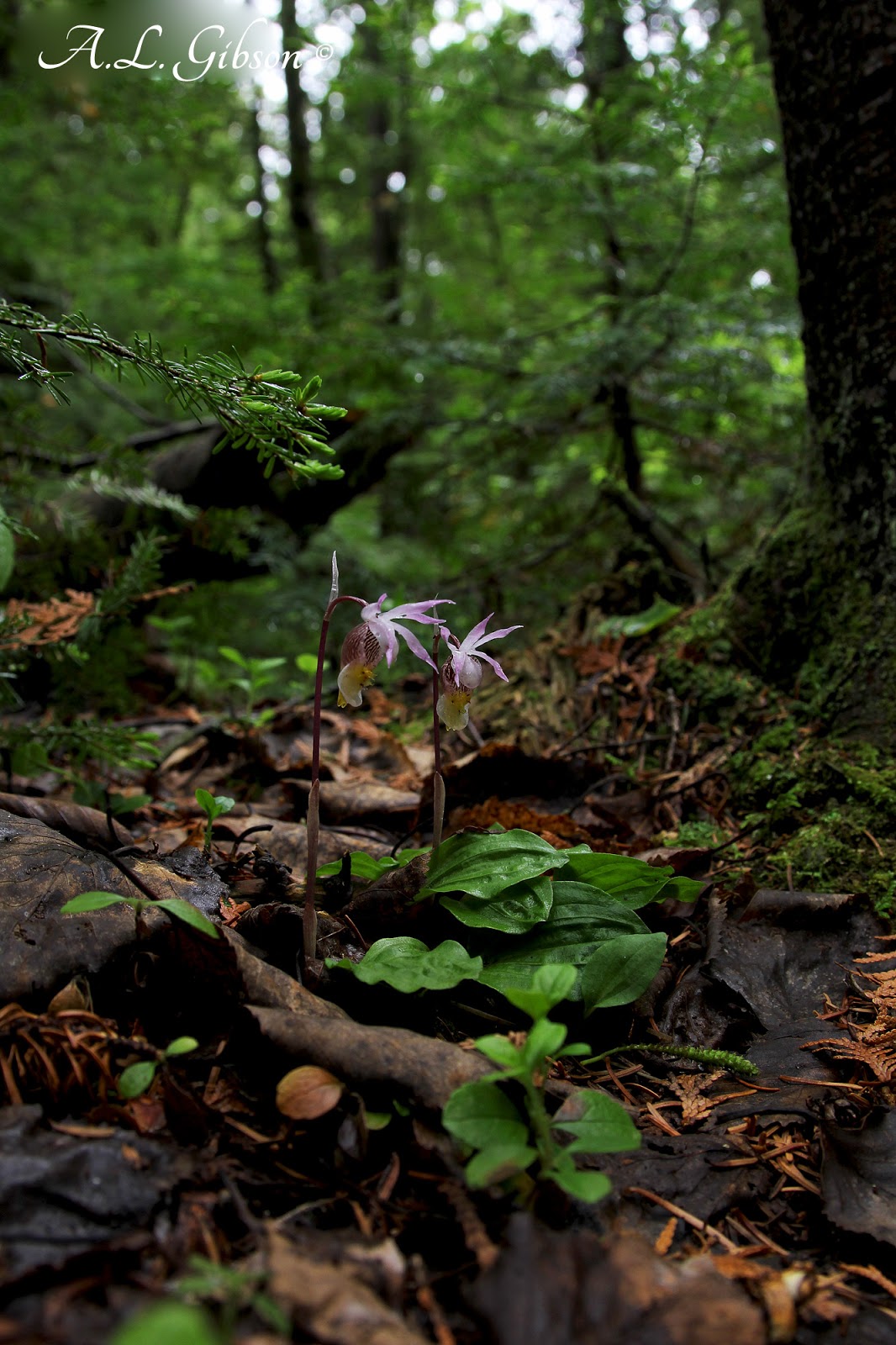
Calypso Orchid (Calypso bulbosa)

In the shaded haunts of one corner of Flowerpot Island's coniferous forests lives a mystical being that I had waited many years to make acquaintances with: the calypso (Calypso bulbosa). This ever more rare denizen of the northern woods is also known as fairy slipper and at first look doesn't appear to belong anywhere else but the equatorial jungle with its countless other bizarre orchid kin. I nearly melted when I first laid eyes on this incredible wildflower and could have spent my entire time on the island staring at its ineffable beauty.


Calypso Orchid (Calypso bulbosa)


There were about a dozen calypsos in picture perfect flower with maybe another dozen in their vegetative leaf-only phase. Much like the ram's head lady's slippers (Cypripedium arietinum), I knew this wildflower would be miniscule in size but I was still caught off guard by just how damn dainty they were. The entire flower was perhaps the size of the end of your thumb.


Calypso Orchid (Calypso bulbosa)

I can't recall the last time I sat and intensely photographed a wildflower as much as I did the calypsos. I'd unsuccessfully hunted them for years and even visited this very spot during my first Bruce trip back in mid June 2011. Alas, that visit was too late and I found only leaves and brown husks that were once their otherworldly flowers. The etymology of Calypso's name, which hails from a nymph in Greek mythology, comes from the meaning "to conceal" or "to hide". This makes perfect sense considering this orchid's affinity for dark, secluded boreal forests. And despite its colorful appearance believe me when I say it's an apt hider.

Calypso Orchid (Calypso bulbosa)


After finding the calypsos in spectacular shape and finally marking such an anticipated "life" orchid off my list, I don't think my feet touched the ground the rest of the day. I merely floated about the island on wings of pure bliss and botanical joy that only something like this orchid could produce. But as memorable as the calypso is, Flowerpot Island has so many more wildflower treasures to share!


Gaywings (Polygala paucifolia

With every step down the island's trails more and more wildflowers appear from behind their emerald curtain. With no deer or other major herbivores on the island, the flora has a chance to largely grow unimpeded with some amazing results. Not only is the diversity of species eye-popping but the density at which many occur is, too. Huge swathes of gaywings (Polygala paucifolia) covered the ground in many spots, including all over the calypso site with the orchids often growing right out of the middle of it.


Dwarf Rattlesnake Plantain (Goodyera repens
Western Rattlesnake Plantain (Goodyera oblongifolia)


The calypso is hardly the only orchid to call this island home either. Well over a dozen species occur throughout the variable landscape and bring their own charm to the party. While not blooming until a month or so later, two species of rattlesnake plantain orchid's artistic basal rosettes could often be seen in the forest understory. The western or giant rattlesnake plantain (Goodyera oblongifolia) may be the blandest of North America's four Goodyera taxa but make up for it by being yet another odd example of a western disjunct that's right at home in this region of the Great Lakes. It's much more common in the Mountain West and PNW and skips the entire middle of the continent before showing up in a very local fashion here on the Bruce.


Naked Miterwort (Mitella nuda)

Delicate. That's the best word to describe the impossibly adorable flowers of the naked miterwort (Mitella nuda). Each flower appears like a snowflake with its deeply fringed sepals adorning the less impressive petals. Not far from this small colony of the naked miterwort was the two-leaved miterwort (M. diphylla), a species common in Ohio but a scarcity for my friend and botanical companion, Rob. It made me chuckle to have both species nigh on side-by-side with one miterwort common to me but rare to Rob and vice-versa.


Early Coral-root (Corallorhiza trifida)


Yet another orchid to grace us with its presence was the limey green stalks of early coralroot (Corallorhiza trifida). While a critically endangered species back home in Ohio, this early bloomer is quite common on the Bruce and occurred all over the more shaded, moist areas of Flowerpot Island. It almost has a ghostly glow to it in the damp, dark understory and makes it rather easy to pick out. 


Striped Coral-root (Corallorhiza striata)

Not to be upstaged by its orchid brethren was plenty of striped coral-root (C. striata) looking dapper in the drier, sunnier forested sections. The overnight soaking rain hadn't fully evaporated off its red and white flowers and gave it a jeweled appearance. While 'striped' is an accurate name for this particular myco-heterotroph, I much prefer the common name of peppermint stick orchid. 


Heart-leaved Twayblade (Neottia cordata)


The calypso can definitely take home the title for most gorgeous of orchids I saw, and despite being genuinely small it cannot also hold the belt for tiniest orchid. That honor goes to the absolutely, positively dainty heart-leaved twayblade (Neottia cordata). It's an easy one to miss if you don't get one shining in a beam of sunlight on the needle-strewn forest floor. Each flower is the size of a BB at best and requires a hand lens or a camera's macro lens to fully appreciate. I had a terrible time getting a good photo due to the deep shade calling for a slooow shutter speed combined with a slight breeze ever-so-slightly pushing the twayblade around. It was miraculously rediscovered in extreme NE Ohio a few years ago after being thought long lost and extirpated for nearly 80 years! I still need to get up to that site and get this tiny wonder on my Ohio list one of these days.


John exploring the mucky margins of the island's marl bed

Earlier in the post I mentioned a unique wetland on the island known as the marl bed. It's hard to miss when walking by as it appears as an extremely shallow, mucky pond of sorts but don't write it off too quickly! One can, and should spend plenty of time exploring its area for a wealth of quality plants. From orchids like the showy lady's slipper (Cypripedium reginae), which wouldn't bloom until later in June, to dozens of sedge species: the marl bed is a real treat.


Starry False Solomon's Seal (Maianthemum stellatum)

Along the not-as-wet margins of the marl bed was a dense colony of the ever-stunning starry false solomon's seal (Maianthemum stellatum) in full, spectacular bloom. It's by no stretch a rarity in Ohio and I see it frequently in the right spots but it's never one I'd ignore and not give some attention to with my camera.


Bird's-eye Primrose (Primula mistassinica)


Undoubtedly the marl bed's most exciting bloomer during our visit was scads of the bird's-eye primrose (Primula mistassinica) flowering throughout its mucky margins. It was a species I'd been too late for on my first Bruce trip and was elated to find looking so fine in its alkaline wetland home. 


The picturesque shorelines of Flowerpot Island

After spending plenty of time in the damp, dark, close quarter conditions of the island's interior it's blissful perfection to finally breakout onto the sun-drenched, boulder-strewn, limestone pavement shorelines. The water is as pristine an aqua blue as exists in the northern hemisphere and makes you think you'd found a wormhole to the Caribbean.


The unmistakable blue perfection of the Georgian Bay

Flowerpot Island is literally nothing more than a giant exposed crag of limestone bedrock and its shorelines show that splendidly. The huge bedrock pavement pieces almost immediately give way to deeper water right off the coast and make for a gorgeous transition of water colors from aqua to deep sapphire blue.


Wall-rue (Asplenium ruta-muraria)


Don't let the scenery of the island's shorelines distract you from botanizing, though! There's plenty more to be had among the boulders and limestone cobble. Some careful searching of the larger moss and lichen covered rocks can reward the patient with patches of the very rare and disjunct wall-rue (Asplenium ruta-muraria). This fern is predominately an Appalachian species found from New England down to Alabama, but fascinatingly occurs hundreds of miles north of any other sites on the Bruce and nearby Manitoulin Island and the Straits of Mackinac area. I don't know what it is about the Bruce that makes it act like such a plant magnet for oddities like this but I freakin' love it!


The large flowerpot
As promised it's time to show off the most prominent feature of Flowerpot Island and its namesake: the flowerpots! These sea stacks were formed over the millennia by water, waves, ice and wind all hammering away at the cliffs along the island's shoreline. Softer rock layers slowly eroded and as the water levels waxed and waned post glaciation it finally left these two unique pillars that we see today. It's hard to believe that man had nothing to do with their formation and all it took was time and opportunity for nature and its power of erosion to do its thing.


Your blogger posing with the larger flowerpot
The smaller, but still awesome flowerpot


Judging just how big the larger of the two flowerpots is is a hard task without something for scale. So what better than your blogger to provide such a service! It's a lot bigger when you get up close to it and you kind of just have to stare in awe and wonder at the odds this thing beats to continue standing year and year, decade after decade. The smaller one is only a third the height but both contain some genuine bonsai white cedar trees that somehow, someway manage to survive growing out of nothing more than a crack in the limestone. I compared photos with extremely similar angles of both flowerpots from my 2011 and 2015 trips and could not notice any bit of growth from any of the cedars. They're seemingly frozen in time, at least from a human being's lifespan's viewpoint.


Slender Cliff Brake (Cryptogramma stelleri)

Another limestone-loving fern you might be lucky enough to see while on Flowerpot Island, and other select areas of the mainland peninsula is the slender cliff brake (Cryptogramma stelleri). It prefers cool, shaded, moist fissures and cracks in the bedrock and exhibits dimorphic fronds, or fronds that differ in their appearance based on whether they're fertile or sterile. The fertile fronds have a lacier, skinnier look to them, while the sterile ones have a more blunt, stubby shape.


Wild Columbine (Aquilegia canadensis)
The rocky shorelines and small flowerpot


The alvar-like shorelines are full of other fascinating plant life and a diversity of wildflowers for those that can peel their eyes away from the water and flowerpots. Species like wild columbine (Aquilegia canadensis), upland white goldenrod (Solidago ptarmicoides), bearberry (Arctostaphylops uva-ursi), northern bog violet (Viola nephrophylla), harebell (Campanula rotundifolia) and ninebark (Physocarpus opulifolius) are but a handful of wildflowers that grow all over the place.


Flowerpot Island sitting in the jeweled waters of the Georgian Bay as you head back for the mainland


I've really only scratched the surface of Flowerpot Island but hope it was enough to show just how amazing a place it is. It's well worth a day of your time up there to head out and explore its forested depths, limestone bluffs, and incredible shorelines.

Well, all good times must come to an end and this long look back on my unforgettable spring 2015 trip back up to the Bruce has finally come full circle. I really hope you've enjoyed this detailed look at what all this gem of a location has to offer and it has inspired you to take a trip up there one of these years. Or maybe it has rekindled your love for it and caused a deep-rooted passion to return to its beauty once more. I really want to make a return trip later in the summer sometime and re-experience it all over again with different plants. The Bruce is one of eastern North America's most incredible of botanical, geological, bird-rich, and scenic of landscapes and I wish I could do her better justice than I have. The Bruce will always be near and dear to my heart for the rest of my days no matter how many times I return. Thanks so much for following along and I hope to see you back for more botanical adventures soon.

- ALG -