Wednesday, June 1, 2016

Flashback to Fall in the Dolly Sods Wilderness

Dolly Sods is so nice why not visit it twice? As promised, I'm back to share some photos from my backpacking trip to eastern West Virginia's Dolly Sods Wilderness and Spruce Knob-Seneca Rocks National Recreation Area last fall. Your narrator had every intention of getting this out last October but it just never happened. So as I usually say on here: better late than never! I hope you enjoyed following along with Kara and I's trip to the same spots this past Memorial Day weekend in my previous post. If you missed it, I encourage you to go back and check it out for a depth of detail and history on this fascinating landscape. This time around I'll let my photos do most of the talking and just caption each one with a brief description. With that being said, I hope you enjoy this photo gallery of one of the eastern United States' most stunning locations to see autumn's glory at its peak.


* Remember to click on each photo to see it larger and in higher resolution! *

The wind-swept heath barrens and boulder fields of Dolly Sods' high plateau come alive in the most vivid of ways
come autumn when the chokeberry, blueberries and huckleberries are at their most scarlet!


Blackwater Falls State Park is an absolute must when in the area regardless of the time of year.
However, fall is especially nice when the gorge is spotted with the orange and gold colors
 of changing maples and birch trees.


Blackwater Falls from the other side of the gorge. The red maple at
peak autumn glory was an especially awesome touch!
Closer look at Blackwater Falls and its red maple. Definitely
one of the more stunning views of the entire trip!


Rolling forested mountains in peak fall foliage that go on and on and on.....


There's a special color of blue reserved for the autumn skies. I assume it's a matter of the sun's angle in
the sky combined with low humidity but whatever it is, it's always spectacular. Especially when above
such a setting as Dolly Sod's heath barrens.


I could never get tired of this landscape and its ephemeral beauty this time of the year.


Ripened cranberries (Oxycoccus sp.) abound in the boggy muskegs.
Stiff clubmoss (Spinulum annotinum) and its spore-bearing strobili. 


The Sods' tundra-like plateau is covered in boggy wetlands known as muskegs that harbor a whole wealth
of disjunct northern flora. Most everything had bloomed and set to seed long ago with only the white tuffs of
tawny cotton-sedge (Eriophorum virginicum) and ruby red pockets of sphagnum moss adding much to the scene.


However, with some careful searching there was still some of the conspicuous
narrow-leaved gentian (Gentiana linearis) blooming out in the muskeg meadows.
This was a life plant for me and one I was extremely satisfied to find still blooming!


Northern bog clubmoss (Lycopodiella inundata)
spore-bearing strobili hanging above its
sphagnum mat home.
Zoomed out view of the bog clubmoss and its
trailing vegetative stems with vertical strobili.
Such neat plants!


Phenomenal peak foliage under a perfect blue sky on the eastern edge of the Dolly Sods plateau. This view faces north
towards famed Bear Rocks of the wilderness area.


Dolly Sods showing off as if it were the Fourth of July.


The upper reaches of Red Creek on the northern end of the plateau. This small stream quickly grows in size as it
drains the entire Dolly Sods plateau and flows into a deep gorge at the southern end. 


Looking southeast over the mountain ridges and their corresponding valleys from the Bear Rocks area in the
golden light of early evening. Sort of makes you feel like you're on top of the world.


The golden light of the evening soon turned into a spectacular sunset with low light bouncing off the mountains.
This was easily one of my favorite captures of the entire weekend. Such incredible scenery.


A classic Dolly Sods sunset behind a pair of red spruce out on the heath barrens and boulder fields of Bear Rocks.


Clear cold nights and no light pollution made for some spectacular
star watching. The streaks of the Milky Way were easily visible as well.
If you  click on these night time exposures and view them in a larger format
 you can see the Milky Way even better and in higher resolution.


My friend, Tanner and I awoke early our last morning there to watch the sun rise above the Virginia mountains from
atop Bear Rocks. It was windy and freezing cold but nothing could keep us from enjoying one of the most
spectacular views in my entire life!


The fog-filled valleys and intense colors were awe-inspiring to say the least. I'll never forget this experience.


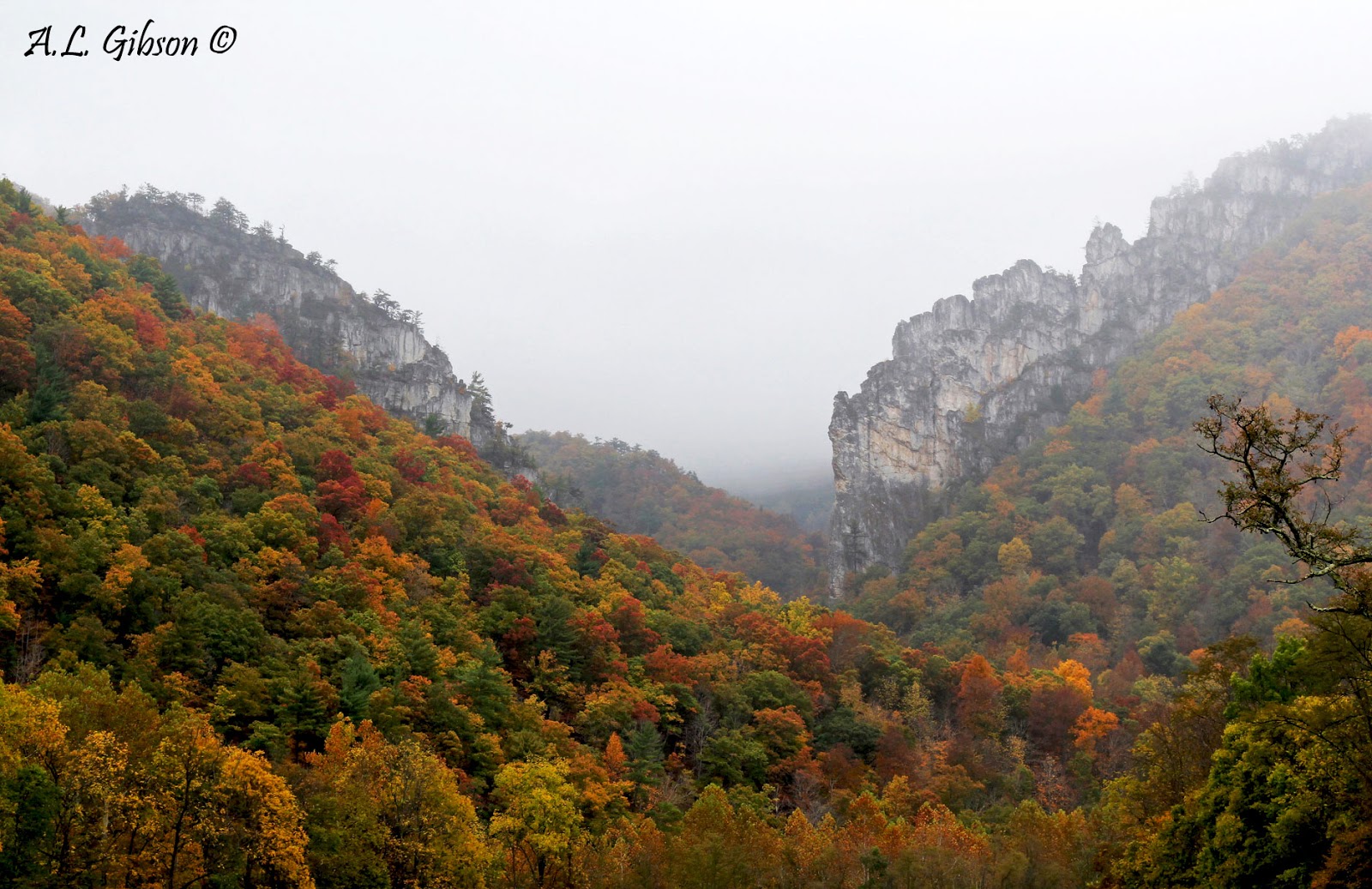
Champe Rocks emerging from the fog and mist, ensconced in autumn's finest.


Famed Seneca Rocks rocketing nearly 900 feet above the valley floor. The previous Champe Rocks photo and
 this and the next ones of Seneca Rocks were taken in 2014 but deserve their place in this post since we
 drove past these very places in the same foliage conditions but with intense light in the wrong places, 
making for poor photography conditions.


The entrance to another world through which a small stream flows at Seneca Rocks.


Tawny cotton-sedge (Eriophorum virginicum) filled bog meadow along the margins of Spruce Knob Lake.


I know I used this photo and view in my last post but I had to use it again from the actual trip it occurred on.
This view from atop Spruce Knob, West Virginia's tallest peak at nearly 4,900' was taken October 11th and while
the rest of the region was at peak foliage, here already looked like winter.


Our trip ended as it began with perfect fall foliage and clear blue skies. We took
the long way home through the Gandy Creek valley on the backside of Spruce Knob and
could not have enjoyed the bumpy gravel road drive more.


Needless to say, the foliage and weather cooperated perfectly for last fall's trip. It was easily one of the most photogenic weekend's of my life and I'd put even more photos in this post if it wasn't packed with them already. If you haven't taken the hint yet and need to have it spelled out for you: go visit Dolly Sods already! I don't know what else could be holding you back if you live within a day's drive. Hopefully these last two posts have proven just how special and magical a place it genuinely is. Spring, summer, fall or winter, you have to experience the Sods!

- ALG -

Tuesday, May 31, 2016

Memorial Day Weekend in Wild and Wonderful West Virginia

The Buckeye Botanist lives! It's been an absurd amount of time since I was last active on here and for that I apologize. I could go into any number of reasons or excuses but suffice it to say life gets hectic and busy. As usual, I have more than enough topics and adventures to share on here and have a long back log going all the way back to this time last year to catch up on. But there's no better time than the present and with a phenomenal long Memorial Day weekend in the rear view mirror, I find it best to go ahead and reminisce on it now with the details fresh in my memory.

Flame azalea in full, spectacular bloom in rural West Virginia 


My partner Kara and I have different work schedules and don't have weekends that coincide entirely with one another very often. Memorial Day weekend is the rare one that allows us to get out together and we took full advantage this year with an adventure to the wonderment that is the Dolly Sods Wilderness in eastern West Virginia. If it sounds familiar, I posted on its fall splendor a couple years ago. In fact, I loved it so much I went back with a good friend of mine last fall and still need to do a post on that trip some time in the future, but one thing at a time.

Misty mountains in the Dry Fork of the Cheat River valley


Kara had never been to Dolly Sods before but heard me gush over its beauty countless times so it was an easy sell as a destination. We couldn't have had more fun even if the weather didn't fully cooperate. We saw a lot of the region's other natural attractions and highlights, too as you'll see coming up. Kara came away more than impressed and excited to return to dive even deeper into the region's splendor and wonder.


The nearly four hour drive down was more than scenic on its own with spectacular mountain and valley views, along with fantastic spring wildflowers still hanging on at higher elevations. It was especially nice to see favorites like rose-shell azalea (Rhododendron prinophyllum) and umbrella magnolia (Magnolia tripetala) doing their thing along rural forested roadsides.

Blackwater Falls, a scenic waterfall outside the small village of Davis and the Canaan Valley


Not far from Dolly Sods is famed Blackwater Falls State Park, and a must-visit when in the area. The falls was easily audible from the parking lot and had a much higher volume of water than my previous viewing last fall. Between Blackwater Falls and Dolly is Canaan Valley: the largest high-elevation valley in the eastern United States. The valley itself is covered in extensive wetlands and streams, and all come together as the Blackwater River that drains the valley through this falls.

Lindy Point overlooking the dramatic Blackwater River gorge downstream from the falls


After flowing over the falls, the Blackwater River cuts an ancient course through a dramatic gorge with some incredible views from the rim. This particular view from the Lindy Point overlook is exceptionally popular for its sunsets and unbeatable view west down the valley. A handful of miles downstream from Lindy Point the Blackwater River empties into the Cheat River, which flows north as a major tributary to the Monongahela. This of course combines with the Allegheny at Pittsburgh to create the Ohio River. It's fun to think that the same water flowing over Blackwater Falls eventually flows past me as I look out across the Ohio River from my beloved Adams County in Ohio.

Red Creek as it flows down from Dolly Sods high plateau


The Dolly Sods plateau is likewise drained by a single watershed in Red Creek. Red Creek quickly cuts itself into its own deep, impressive gorge on the south end of Dolly Sods before flowing into the Dry Fork of the Cheat River. I love seeing waterways in their wild form; rocky and swift. No dams or taming oxbows when this high up in the mountains and away from their lazy lower stretches.

View across the Allegheny Mountains from Bear Rocks atop Dolly Sods' high plateau


Dolly Sods Wilderness is located within the immense Monongahela National Forest and is one of the state's most iconic and well-known natural treasures. It sits atop a high plateau on an escarpment known as the Allegheny Front, which acts to separate the Appalachian Plateau and the Ridge and Valley physiographic regions. The plateau rises some 2,700 to 4,000 feet above sea level in the Dolly Sods area and creates some of the most charismatic landscapes in the state. Wind-swept boulder fields, heath barrens, stunted trees, ancient sphagnum bogs and an association of disjunct northern flora and fauna all merge together to make Dolly Sods as diverse as it is distinct.

Residing at a high elevation combined with sitting on an exposed escarpment, Dolly Sods gets more than its fair share of intense and inclement weather. Rain, sunshine, snow and fog can all happen at a moment's notice and often in fast-shifting combinations. The wind adds another layer of atmospheric complexity to the landscape and never, ever seems to stop blowing. In fact, the Allegheny Front is said to be one of the most consistently windy places east of the Mississippi.

Kara enjoying the view east across the rolling mountains ridges and deep valleys


Spring is late to arrive at such a high elevation and harsh climate. The landscape still looked somewhat winter-like in the Bear Rocks boulder fields and heath barrens but for the deciduous trees beginning to leaf out and early blooming shrubs just putting forth their first flowers. Kara was instantly dazzled by the view out across the Allegheny Mountains towards Virginia from atop the plateau's eastern edge. I told her to wait until she visited during peak fall foliage; it's on a whole other level!

Lowbush Blueberry (Vaccinium angustifolium)
Minnie-bush (Menziesia pilosa)


The harsh, highly acidic nature of the plateau's landscape makes it a haven for hardy, cold-tolerant shrubs from the heath family (Ericaceae). A quick five minute walk around can reward the astute observer with well over a dozen ericaceous species such as lowbush blueberry (Vaccinium angustifolium), velvet-leaved blueberry (V. myrtilloides), azaleas (Rhododendron spp.), mountain laurel (Kalmia latifolia), black huckleberry (Gaylussacia baccata) and cranberries (Oxycoccus spp.). The most exciting denizen of the heath barrens for this botanist is the Appalachian endemic minnie-bush (Menziesia pilosa). Its foliage is reminiscent of the deciduous azaleas but its flowers a unique yellowish-orange bell like that of a blueberry.

Open rocky heath barrens and pockets of spruce forest atop Dolly Sods' plateau


Dolly Sod's plateau was formally an extensive old-growth red spruce forest dotted with cranberry sphagnum bogs, heath barrens and rhododendron/laurel thickets rather than the much more open landscape it is today. Intense logging through the 19th and into the early 20th century removed just about all of the spruce forest and burning practices kept the newly-opened areas as grassy meadows used for grazing. Over the decades much of the northern hardwoods forest has returned with species like red oak, beech, sugar maple, basswood, yellow and black birch, cucumber magnolia, and hemlock prevalent throughout. Red spruce has come back in scattered spots but not even close to its former grandeur. I can only imagine what that magnificent spruce forest must have been like with specimens five plus feet in diameter and nearing 100 feet tall. It's been said the primeval red spruce forest of the upper Red Creek valley (modern-day Dolly Sods) was the finest of its kind in the world.

Painted Trillium (Trillium undulatum)


Before heading out for our weekend of camping and exploration, I held onto the slimmest of hopes some of the elusive painted trillium (Trillium undulatum) would still be in good shape. While the vast majority I found had already replaced their flowers for a maturing fruit capsule, a few were in prime photogenic shape and the best botanical find of the weekend. This species is excruciatingly rare in Ohio and one I've laid eyes on precious few times, so every encounter is met with ineffable joy. Kara can attest I practically skipped the whole way back after discovering these treasured beauties.

Bunchberry (Cornus canadensis)


Another Ohio rarity that calls Dolly Sods home is the adorable bunchberry (Cornus canadensis). This creeping woody sub-shrub is predominately a species of the Great Lakes region and Northeast but occurs at high elevations in the Appalachians and sporadically out in the Rockies. Here in West Virginia it's at its southernmost distribution in the east, a relic of the last glacial epoch that brought it this far south.

The sights from atop Dolly Sods never get old no matter how the season or how many times you see them


Our weekend started off sunny but was overcast and eventually rainy for the second half. Fortunately, Kara got to see the vista views before the rain and fog set in and shrouded the landscape in mystery. My first time at Dolly was in a steady rain and pea soup fog, making views anything more than a hundred feet or so in front of me non-existent.
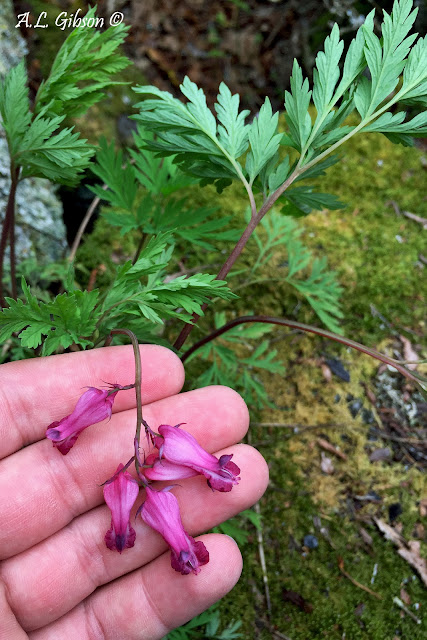
Wild Bleeding Hearts (Dicentra eximia)


If it weren't for the aforementioned painted trillium, the surprise discovery of wild bleeding hearts (Dicentra eximia) in excellent flower would have taken the botanical cake. Many may recognize this plant as something you see in the garden and/or landscape setting but is actually an indigenous species to the Appalachians. It's rather uncommon throughout its limited range and most prevalent in the Virginias. It was a life plant for me and a beyond exciting find. Best of all is the fact that Kara is the one who saw it! She called me over to see a "really neat pink flower we hadn't seen yet", which made me ponder what it could be, as this wasn't on my radar for this trip. It was nestled in a mossy crevice between boulders and an impressive spot by her. I think she's developing quite the sharp eye for plants!

Pink Lady's Slipper (Cypripedium acaule)


A short time later it was my turn to point out a thrilling pink flower in the pink lady's slipper (Cypripedium acaule). We ended up seeing quite a few over the weekend and it was quite rewarding to share a beloved orchid of mine with Kara that she'd only seen in my pictures. Her first impression of it was the kind of flower Georgia O'Keeffe would have enjoyed painting. I wouldn't disagree!


This past winter I got really into the mosses and have only grown to love them more and more. I plan to do a fun post on the topic at some point, sharing the great diversity of species I've come across so far. One that really grabbed my attention while at the Sods this weekend was the scads of knight's plume moss (Ptilium crista-castrensis) all over the pace. It's an extirpated species in Ohio but a common moss in the northern boreal forests and high elevations further south. I'm sure to have seen it before but never knew its name, let alone noticed so this time around I was able to properly make its acquaintance and put it on my life list.
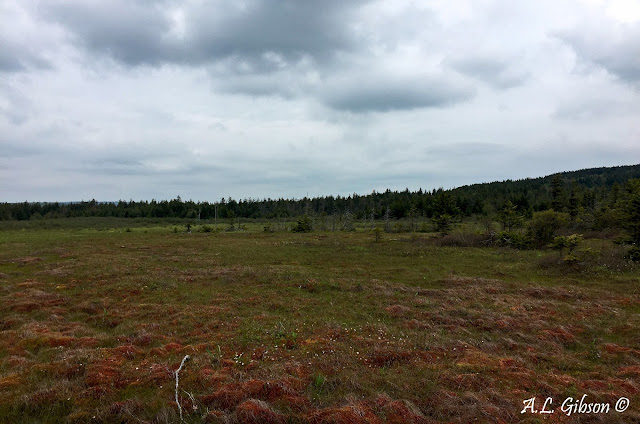
Looking out over a large expanse of muskeg atop the Dolly Sods plateau


It wouldn't have been a proper trip to the Sods without a bit of exploring the plateau's extensive muskeg complexes. The bog landscape is even slower to wake up from its winter slumber and still had a deadened look to it. However, it won't be much longer before it greens up and its summer time flora comes alive and paints the saturated sphagnum with color.

Few-flowered Sedge (Carex pauciflora)
Sphagnum moss with spore capsules


The few signs of life within the muskeg were emerging sedges, including the rare and extremely disjunct few-flowered sedge (Carex pauciflora). It's almost solely a species of the northern peat lands but for this small area of eastern West Virginia hundreds of miles to the south. Yet another example of a glacial relic perched atop these special bog-laden mountains. Despite most all the other sedges barely starting to bloom, the few-flowered sedge was already showing maturing perigynia.

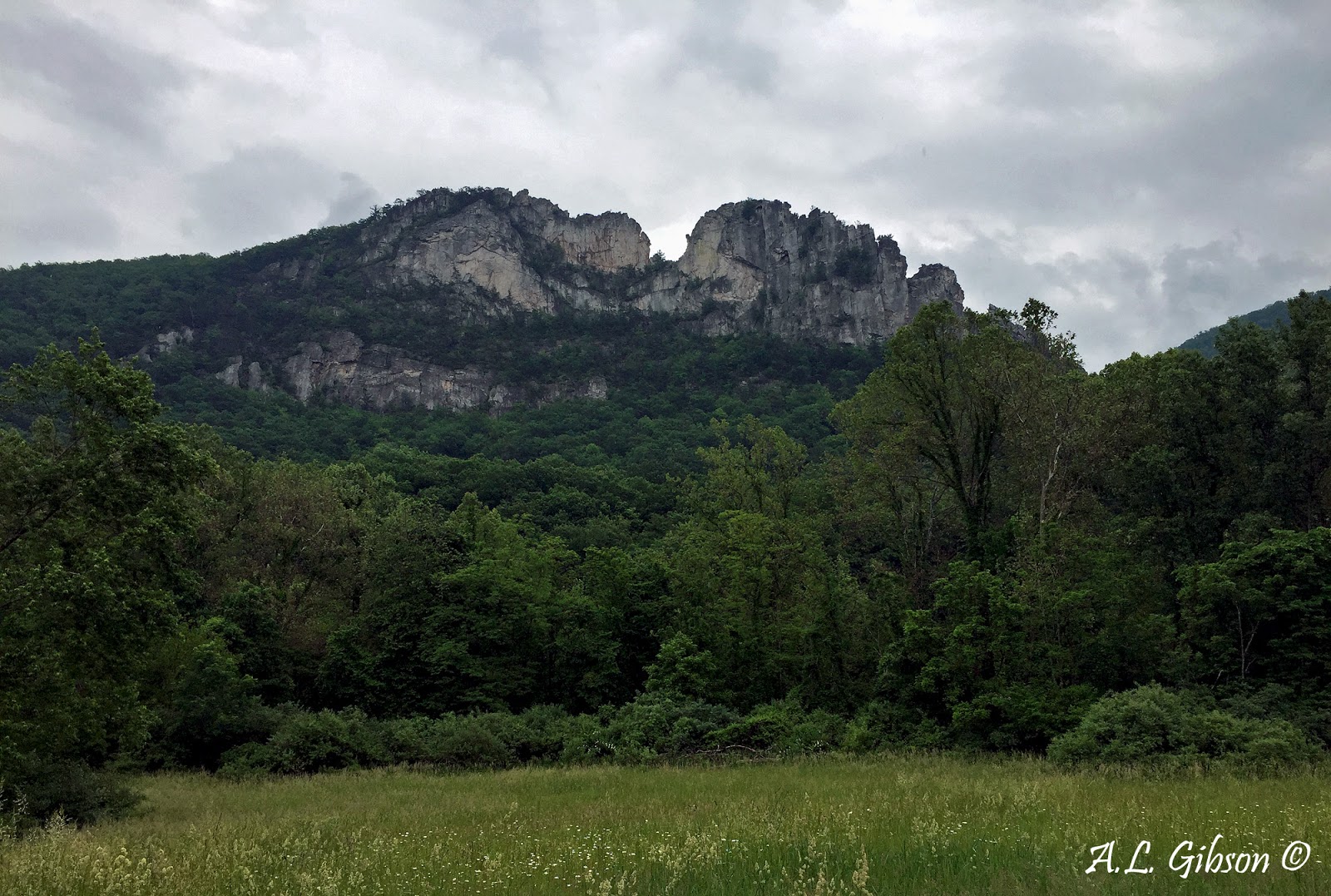
The ever famous and impressive Seneca Rocks

As our weekend at Dolly came to a close, I decided to take a long, scenic way back to catch a few other places I wanted Kara to see and experience. First up was a quick stop at the ever-impressive Seneca Rocks not far to the south from the Sods. Had there not been rain on the horizon or us already exhausted after a long weekend of hiking and exploration, I would have convinced her to make the hike to the top for an unforgettable view. There's always next time!

Your blogger atop Spruce Knob last fall


We continued on from Seneca Rocks and made the long, winding trek up to Spruce Knob, West Virginia's highest point at nearly 4,900' above sea level. The weather conspired against us and by the time we reached the summit the clouds, rain and fog had moved in making any extended views impossible. So while we struck out, I'll save face by sharing a photo of your narrator atop Spruce Knob from my visit last autumn. Definitely an alpine feel, at least for being in the East!

We ended our tour of the region on a misty scenic drive down the backside of the mountain into the Gandy Creek valley, following it 20 some miles on a gravel road back to the main highway. I asked if Kara was impressed and would ever come back with me and she responded with a resounding, "Yes!". Music to my ears as I could come back to this area of eastern West Virginia time after time and never grow tired or weary of its charm and unbelievable scenery. I'm already planning a return trip later this summer and again in the autumn. Speaking of autumn, I'll have to post on that trip sometime in the future. It's well worth my time writing and your time reading! I certainly hope to get back in the spirit of blogging more often and sincerely thank all my valued readers for your patience and understanding!

- ALG -

Thursday, October 22, 2015

Top Ten Life Plants of 2015

It's hard to believe yet another year has come and gone. Spring and summer flew by in a blur your narrator can hardly comprehend, with autumn currently in its own hurry as well. Despite its rush, the 2015 field season was one to remember. There's never enough time to see and do everything on your list during a calendar year but then that's what makes each and every new experience you do have all the more memorable. For a botanist, or at least this botanist, one of the most rewarding tasks at the conclusion of the growing season is updating the life list. As time goes on and I become more and more acquainted with my local and regional flora, the frequencies of making new floral friends decreases. This makes each additional life species marked off the list feel just a bit more gratifying than the last. All the more reason to travel further outside one's botanical comfort zone, I say.

With our first frosts already in the past, I'd like to reminisce on my personal top ten favorite "lifers" from 2015's botanical forays. Just about all of them came outside Ohio's borders this year from places like Ontario, Wyoming or West Virginia. All ten plants were species I'd never had the pleasure of seeing in the flesh before; many only dreamily through a computer monitor or from the pages of my extensive botanical library. Some I specifically set out to see, others I came across by complete chance. Each one aroused emotions of excitement and disbelief, often erasing years of anxious desire. Many a tear of joy was shed while looking upon these featured wildflowers, which only served to reaffirm my passion and ambition for seeking out these often-times rare and magnificent wonders.

All that being said, let's begin the countdown of my favorite life plants from an unforgettable spring, summer and fall of botanizing throughout North America...


Rocky Mountain Fringed Gentian (Gentianopsis thermalis). Wyoming, Early August

Starting off the countdown at number ten is the Rocky Mountain fringed gentian (Gentianopsis thermalis). Its electric blue petals graced many wet alpine meadows, fen-like stream sides and groundwater seeps during my time out in the Wind River Range of western Wyoming this past August. I've seen two of its closely related and equally stunning brethren (G. crinita and G. virgata, respectively) back in Ohio, but the surrounding scenery for these delicate beauties put them on another level of spectacular.


Northern Comandra (Geocaulon lividum). Bruce Pen., Ontario, June.


The criteria for how a plant species ends up making this most esteemed of lists goes much deeper than physical beauty. If that was the lone requirement, I hesitate to think lifer number nine would have even sniffed the final cut. What northern comandra (Geocaulon lividum) may lack in showiness, it more than makes up for in rarity and uniqueness. It's only known to occur sparingly in less than a dozen states; all bordering Canada, where it's much more common. It grows in cold coniferous forests on stabilized dunes and on rare occasions in bogs/fens in the Great Lakes region. It's much more conspicuous in fruit when it trades its small green axillary flowers for a striking orange-red drupe. When I came across this while up on Ontario's Bruce peninsula back in June, I was ecstatic to finally makes its acquaintance. I instantly recognized its unusual appearance and giddily wrote its name down on the day's plant list. Even better was the lush carpet of moss and reindeer lichen it emerged from, often times side-by-side with ram's head lady's slippers (Cypripedium arietinum).


Linear-leaved Gentian (Gentiana linearis). Dolly Sods Wilderness, WV, October.

The linear-leaved gentian (Gentiana linearis) comes in at number eight on the countdown of 2015's best life plants. It was just a couple weekends ago during an autumn backpacking trip to West Virginia's Dolly Sods Wilderness that I finally got to see this procrastinator of a wildflower. The Sods plateau's boggy meadows and muskegs contained hundreds upon hundreds of these gentians but only a literal few still held corollas exhibiting their sky blue color. The pair photographed above were the best to be seen, glowing like sapphire beacons among a sea of browning vegetation and overcast skies.


Green Spleenwort (Asplenium trichomanes-ramosum). B.P., Ontario, June
Limestone Oak Fern (Gymnocarpium robertianum). B.P., Ontario, June


The decision making process in putting this list together can be as difficult as it is fun. And since I make the rules, I decided to call number seven a tie between two ferns that were growing literally only yards apart. The aforementioned Bruce peninsula in Ontario is a true botanical wonderland known the world around for its plethora of odd and disjunct ferns. The two celebrated spore-producers seen here are the green spleenwort (Asplenium trichomanes-ramosum) and limestone oak fern (Gymnocarpium robertianum). Both are well outside their normal, albeit already limited distributions on the Bruce's narrow spit of limestone. Their high-quality alvar habitat was full of other fascinating plant life but more on that in a future post.


Great Lakes Iris (Iris lacustris). Bruce Peninsula, Ontario, June

Moving onto life plant number six has us staying on the Bruce for one of the most dainty wildflowers I've yet seen. The Great Lakes iris (Iris lacustris) was one I missed during my initial visit to the region four years earlier and managed to catch still in flower upon my return this past June. This tiny iris' size is lost without scale in the photo but each blossom is the size of a silver dollar! They are a globally rare, federally threatened species endemic to northern Lake Michigan and Lake Huron's cobbled, sandy shorelines. These occurred just about everywhere the habitat was suitable along our section of Lake Huron, even blooming just outside the cabin's door.


Hart's Tongue Fern (Asplenium scolopendrium). Bruce Pen., Ontario, June

If it's not broke, don't fix it. I think that's a good line of advice and since the Bruce isn't broke, let's stick with it for life plant number five. As I mentioned earlier, the Bruce is widely known for its abundance of unusual fern taxa, with perhaps none as sought after as the hart's tongue fern (Asplenium scolopendrium). While somewhat common across the pond in Europe, it only occurs as a local anomaly in a handful of places in the entirety of North America (AL, TN, NY, nMI and Ontario). I made sure to visit the cool, moist, rocky terrain beneath gorgeous Inglin Falls outside Owen Sound for this phenomenal fern and was not disappointed. It was yet another missed lifer during my first stint up on the Bruce I was proud to check off.


Southern Monkshood (Aconitum uncinatum). Scioto Brush Creek, OH October

Ohio is only represented once on this year's list but what a plant it is! Number four was one of my most unexpected discoveries, as well as one of the most breathtaking. Southern monkshood (Aconitum uncinatum) is one of the state's most imperiled and endangered of wildflowers; growing only in a select few locations along Scioto Brush Creek, arguably Ohio's finest and most intact waterway. Southern monkshood typically blooms from late August into September, so I wasn't expecting much when I gave one of the known sites a hike through earlier this month. As luck would have it a single plant still bore a few blossoms in superb photogenic shape! A species of the southeastern US, this location marks one of only a handful of known sites north of the Ohio River. Long may it persist along this spectacular stretch of water.


Southern Small Yellow Lady's Slipper (Cypripedium parviflorum var. parviflorum).
Lewis Co., Kentucky, May.

Back in May, I posted on here an account of arguably the most serendipitous orchid find of my life thus far in the southern small yellow lady's slipper (Cypripedium parviflorum var. parviflorum). Myself and good friend and very knowledgeable botanist, Roger Beadles were poking around in northern Kentucky for the rare Kentucky lady's slipper (C. kentuckiense) when we stumbled across this small patch of 2015's life plant number three. It was a complete surprise and the last of eastern North America's lady's slipper orchids I needed to see. You can read all about that experience by following this link here. Later in the year, myself and some others came across an intriguing patch of pretty darn small lady's slipper plants on a preserve in Adams Co., Ohio. It was late August and the plants essentially vegetative only but they definitely sparked my interest and have earned a future visit this upcoming May. I have my hopes they could be the first documented occurrence of the southern small yellows on Ohio soil. Adding a new orchid to the state's flora is a dream bucket list item to be sure! Stay tuned...


Hooded Ladies'-tresses (Spiranthes romanzoffiana). Green River Lakes, WY, August

Speaking of orchids and bucket list items, it brings me a lot of pride and joy to have this next wildflower be number two on my countdown of 2015's best lifers. For those that know me personally and/or follow this blog with any regularity assuredly knows I'm obsessed with wild orchids. It's been a major life goal to see and photograph all 47 species indigenous to Ohio, and I've been sitting painfully close at 46 for over a year now. Not any more! The hooded ladies'-tresses (Spiranthes romanzoffiana) was the last to elude me and was a complete and utter surprise find while out in the mountains of western Wyoming this August. Dozens of them lined the banks of pristine rushing mountain streams and their adjacent meadows, glistening like a jewel in the bright sunlight. It's incredible to think I've now seen all 47 species, even if some haven't been within Ohio...yet. Just seeing them regardless of location has been special enough. More on these and this trip later!


Calypso (Calypso bulbosa). Bruce Peninsula, Ontario, June

If orchids won silver and bronze in this countdown they might as well make it a clean sweep with the gold as well. 2015's most exceptional and emotional life plant was none other than the elusive calypso or fairy slipper (Calypso bulbosa). If I returned to the Bruce to see any one thing, it was this reclusive orchid of the northern woods. I could barely contain my excitement on the hike back to its known location on Flowerpot Island with butterflies in my stomach. Was it still blooming? Would I even find it? What if I was too late like last time? I needn't worry as a dozen or so calypsos were in pristine flower under the dense shade of its coniferous haunt. I spent a long time sitting in front of them in silence and stillness, admiring their miniscule appearance packed with delicate detail and color. It was a moment nearly a decade in the making from the first time I saw this species in one of my first wildflower books. The calypsos were still wet from the previous night's rain, or maybe it was from the tears that fell from finally laying eyes on these most astonishing orchids. Much, much more on this trip and moment in future posts!

I hope you've enjoyed this look back onto my favorite finds and life plants of 2015. I'll be curious to hear from you, my readers if any of these are on your life lists or plants you've had the honor of coming into contact with before. If anything I hope I've warmed your spirits even a wee bit as the reality of another wildflower season come and gone sinks in. If 2016 is anything like my 2015, it will be full of fantastic finds, exciting discoveries and more memories made soaking in the natural world's beauty and diversity. As I mentioned earlier, many of these plants/moments have their own blog posts forth coming, so I hope you'll look forward to that as winter sets in and we all begin anew the dream of spring.

- ALG -

Wednesday, October 14, 2015

Find "The Buckeye Botanist" on Instagram!

Sunrise over Flat Top Mountain and Green River Lake in the Wind River Range, Wyoming. August 2015.

Hello, everyone! It's been a while since I was last able to post on here but rest assured I'm still among the breathing and with more material and topics than ever to share. It's been an incredibly busy growing season for your narrator. Exciting trips to the Bruce peninsula, Ontario back in early June; Wind River Mountains of western Wyoming in August and the Dolly Sods Wilderness region in West Virginia just last weekend were unforgettable. Rest assured, I will be bringing those tales and more to you in the near future with three photos here to whet your appetite. With winter on the not-so-distant horizon, I expect to have more time at the keyboard.


Blackwater Falls, Blackwater Falls State Park, West Virginia. October 2015

All that being said, I'd like to take a quick moment to say I'm now on Instagram! (@The_Buckeye_Botanist). The move is long overdue but better late than never. The reason I'm taking the time to share this is it's an extremely easy and fun way to keep up with me in my day-to-day work and travels. I post nearly every day, many of those days with multiple photographs. It takes only a few minutes time out of my day to toss up a photo or two with a short paragraph to accompany it; rather than sit down and write up my notoriously long-winded posts on here. Just envision them as bite-sized blogs you can digest in a matter of seconds.


Limestone shorelines of Flowerpot Island, Fathom Five National Marine Park, Bruce Peninsula, Ontario, Canada. June 2015.

For those not already following me on Instagram, you can find me on there @The_Buckeye_Botanist. If you enjoy my rambling on here, as inconsistent as it can be, you're sure to savor a much more steady diet of the natural wonders of Ohio and beyond on Instagram! I hope to see you on there and feel free to like/comment/share any of my material. Don't be shy to interact with me on there personally either! So be sure to check out and follow @The_Buckeye_Botanist on Instagram today!